
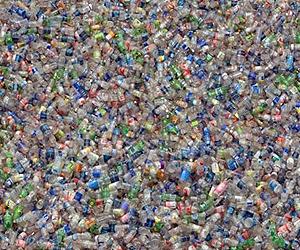
Some 250 billion microscopic pieces of plastic are floating in the Mediterranean, creating a biological hazard that reverberates up the food chain, according to research supported by green campaigners.
The estimate comes from French and Belgian marine biologists who analysed water samples taken in July off France, northern Italy and Spain to a depth of 10-15 centimetres (four to six inches).
"The rough estimate is that there are roughly 250 billion pieces of micro-debris in all the Mediterranean," Francois Galgani, of the French Institute for Exploration of the Sea (Ifremer), said on Wednesday.
The figure derives from 4,371 minute pieces of plastic — average weight 1.8 milligrams (0.00006 of an ounce) — found in the samples, "which extrapolates to roughly 500 tonnes for the entire Mediterranean," Galgani said.
Ninety percent of the samples, taken by volunteers from Expedition MED (Mediterranean in Danger) on a 17-metre (55-feet) yacht, had such fragments.
The sampling only covered surface waters and is a preliminary evaluation. Further samples, off Gibraltar, Moroccow, Algeria, Tunisa, Sardinia and southern Italy, will be taken in 2011 to get a wider picture.
Micro-sized plastic is an enduring hazard, as it becomes mixed with plankton, which is then ingurgitated by small fish that are then eaten by larger predators, says Expedition MED.
It says there is an accumulating pile of evidence of the damage that this does to larger forms of marine life, including seals and tortoises.
"The only solution is to stop micro-debris at the sources," said Expedition MED's Bruno Dumontet.
The group is launching an on-line petition to demand tougher European Union (EU) rules on the disposal and biodegrability of consumer goods.
earlier related report
Plastic bags outlawed in Italy from January 1
Rome (AFP) Dec 30, 2010 –
Italy is set to ban plastic bags from shops and supermarkets across the country on January 1 as shoppers eager for the New Year's sales prepare to swap to biodegradable, fabric or paper bags.
Italians are among the top consumers of plastic bags in Europe, using more than 300 per person a year, or around a quarter of the 100 billion plastic bags imported from China, Thailand and Malaysia that are used annually across Europe.
"This marks a key step forward in the fight against pollution and it makes us all more responsible in terms of recycling," said Environment Minister Stefania Prestigiacomo.
Prestigiacomo said the government was launching a public awareness campaign to promote the use of bags made out of natural and recyclable materials "that don't just have to be practicable and good for the environment but also fashionable."
Environmental groups have welcomed the ban, which will come into effect on Saturday despite industry opposition.
Share This Article With Planet Earth
