
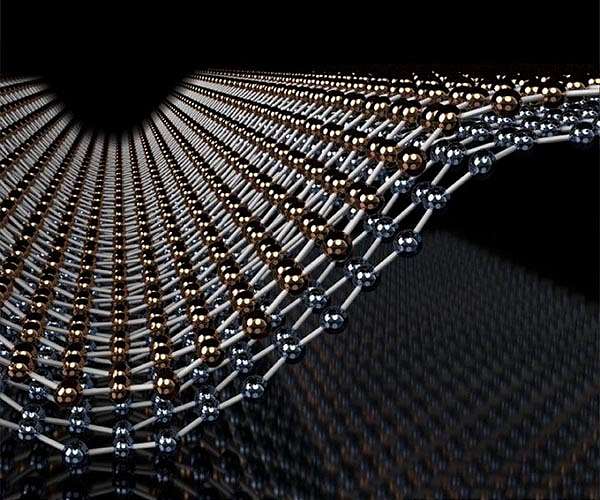
Graphene, a material harder than diamond, stronger than steel, yet flexible and lightweight, has gained significant attention for its remarkable properties. However, the challenge of finding a cost-effective and scalable method for producing high-quality graphene remains. Researchers from the University of Cordoba (UCO) have developed a new prototype that could be a critical advancement in large-scale graphene production. This design increases graphene output by more than 22%, while maintaining the material's high quality.
The breakthrough, which builds on an existing patent, utilizes plasma technology, often referred to as the fourth state of matter. Plasma, a partially ionized gas found in natural phenomena like lightning, can also be generated in laboratories. "It is a highly energetic medium that is capable of breaking down organic molecules very easily," said lead author Francisco Javier Morales. In their process, a plasma torch is used to decompose ethanol, rearranging its carbon atoms to synthesize graphene.
The key innovation in this study, led by principal investigator Rocio Rincon, is the optimization of energy efficiency during graphene production. Previous experiments revealed that nearly 43% of the supplied energy was wasted. To mitigate this, the team implemented a Faraday cage, a metal mesh that functions as an electromagnetic shield, around the plasma. This modification significantly reduces energy loss, boosting graphene production from 4.3 to 5.2 milligrams per minute with the same power input.
The study demonstrates how shielding the reaction chamber can enhance energy utilization, resulting in higher graphene yields without sacrificing quality.
