
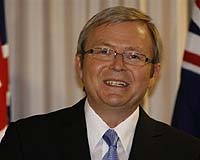
Australia on Friday announced increased aid of three million dollars (two million US dollars) to flood-stricken Fiji, where swollen rivers and landslides have claimed 11 lives.
Foreign minister Stephen Smith said that while Canberra wanted the South Pacific nation to return to democracy, the issue would not stand in the way of humanitarian assistance.
Australia has been one of the most outspoken international critics of Fiji's regime since military leader Voreqe Bainimarama toppled the elected government in a bloodless coup in December 2006.
One third of the pledge — 150,000 dollars of which went to Fiji earlier this week — would go to boost aid programs and to supply food, water, sanitation and transport, he said.
The remaining two million would be made available for recovery and reconstruction programs, Smith said.
"Whether a further contribution is required, whether a further contribution is appropriate, we will determine in the future," he told reporters.
"Firstly we need the flood waters to recede to enable a proper assessment to be done of the damage and the full extent of recovery and reconstruction."
The New Zealand government also offered an additional 500,000 dollars (275,000 US) in aid on Friday, taking its total contribution to 600,000 dollars.
"It is clear that the flooding has caused significant damage to infrastructure, businesses and crops in Fiji," said Foreign Minister Murray McCully.
"Over the coming weeks the immediate relief phase will become a longer-term recovery effort."
The death toll since the floods started on Friday last week reached 11, including people swept away by swollen rivers and several caught in landslides. More than 10,500 people remained in evacuation centres.
The cost of damage from the floods — excluding agriculture — has been estimated at nearly 32 million Fiji dollars (18 million US) by the National Disaster Management Office, after the floods destroyed bridges, ripped up roads and cut power and water supplies.
Fiji's Sugar Cane Growers Council has estimated losses worth tens of millions of dollars to the country's most important agricultural industry.
Thousands of Australian and other tourists have been stranded in Fiji by the floods — some at the country's international airport at Nadi — with disruptions and cancellations hitting the key tourism sector.
Heavy rainfalls were forecast to return to the western region by Saturday, according to the Fiji Meteorological Service.
