
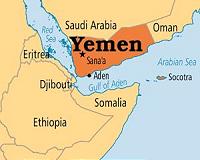
UN chief Ban Ki-moon on Monday called for an immediate two-week humanitarian pause in Yemen to mark Ramadan as talks got underway in Geneva to try and resolve the bloody conflict.
"I hope this week starts the beginning of the end of the fighting," Ban said.
"Ramadan begins in two days," he said, stressing that the holy Muslim month should be a period for "harmony, peace and reconciliation".
"I have emphasised the importance of another humanitarian pause for two weeks," Ban said.
Ban dismissed fears that the talks would be torpedoed by the non-arrival of an Iran-backed rebel delegation in time for the talks. The team's plane was delayed in Djibouti, according to UN and diplomatic sources.
He said the delay was due to logistical reasons and added: "I am pleased to know that the other parties are on their way" and were expected to arrive later Monday.
Underscoring the need for immediate action in Yemen, he said: "The ticking clock is not a time piece, it is a time bomb."
He also called on all parties to reach agreement on a "comprehensive and lasting" ceasefire.
Yemen rebels yet to arrive in Geneva for UN talks: sources
Geneva (AFP) June 15, 2015 –
A team of Iran-backed Yemeni rebels had not yet arrived in Geneva for peace talks, due to start on Monday, because their plane was delayed, UN and diplomatic sources said.
The delegation comprising members of the Ansarullah and their allies, loyal to ex-president Ali Abdullah Saleh, left Sanaa on Sunday afternoon but were forced to have a long halt in Djibouti, the sources said.
Talks between the Huthi rebels and the government of exiled President President Abedrabbo Mansour Hadi were supposed to start in Geneva early on Monday in the presence of UN chief Ban Ki-moon.
Their positions are so far apart that analysts feel any breakthrough is highly unlikely and the delegations will not even begin talks in the same room.
The UN's peace envoy for Yemen, Ismail Ould Cheikh Ahmed, said that Monday would see the start of "preliminary inclusive consultations" on the war that has claimed more than 2,500 lives and sparked a "catastrophic" humanitarian crisis.
Yemen has been wracked by conflict between the rebels and Hadi's internationally recognised government.
The dissidents have seized control of large parts of the country including the capital Sanaa, forcing Hadi to flee to Saudi Arabia in February.
Fearing an Iran-friendly regime on its south, Saudi Arabia has led a campaign of air strikes against the rebels since March 26 but has so far failed to force them from territory they have seized.
International powers are keen for a resolution to the conflict, fearing the growing power of Al-Qaeda in the Arabian Peninsula, the Yemeni branch of the jihadist network which has taken advantage of the chaos to seize territory.
UN expects Yemen talks to start Monday in Geneva
Geneva (AFP) June 14, 2015 –
UN-sponsored talks aimed at ending the conflict in Yemen by bringing representatives of the warring factions to Geneva are expected to begin on Monday, a UN spokesman said.
"We expect the parties to be here for what we call Geneva Consulatations tomorrow," spokesman Ahmad Fawzi told reporters on Sunday.
Fawzi said representatives of both sides in the Yemeni conflict were expected to be in the Swiss city on Sunday night.
The exiled, internationally-recognised government of President Abedrabbo Mansour Hadi said its delegation flew to Geneva on Saturday.
But representatives of the Iran-backed Shiite Huthi rebels and of former president Ali Abdullah Saleh's General People's Congress refused to board a UN plane from Sanaa to Geneva on Saturday.
A Huthi official said the rebels' refusal was grounded in the fact the plane was due to stop off in Saudi Arabia — which is leading a fierce campaign of air strikes against them.
Should the talks kick off in time, Fawzi said there would be "extremely intensive consultations day and night".
"We still hope that the parties will observe a humanitarian pause," he added.
The UN Security Council and Secretary-General Ban Ki-moon have both called for a renewed humanitarian pause in the fighting following May's truce.
The talks brokered by UN envoy Ismail Ould Cheikh Ahmed would be aimed at securing a ceasefire, agreeing on a withdrawal plan for the Huthis and stepping up deliveries of humanitarian aid.
The Security Council this week heard a report from new UN aid chief Stephen O'Brien, who described Yemen's humanitarian crisis as "catastrophic," with 20 million civilians in need of aid — 80 percent of the population.
