
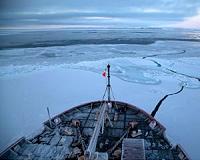
The Canadian government needs to establish ecologically and socially sound policies for Arctic Ocean shipping amid an increase in traffic through the fragile area caused by melting sea ice, a new report Tuesday said.
The report from The Pew Charitable Trusts proposed a "comprehensive system of tiered shipping routes that will benefit Canada, the shipping industry and northern communities."
Maritime traffic through the Canadian Northwest Passage is up 166 percent since 2004 as shipping companies seek out faster and cheaper routes between Europe and Asia.
But the area is also home to Inuit communities, marine life such as beluga and bowhead whales, narwhals, and polar bears and is also part of marine mammal and seabird migration routes, the report said.
"Seven key government studies have issued more than 170 individual recommendations for reform. However, the nation lacks a clear, cohesive vision for Arctic shipping policy, so these recommendations have fallen on agencies with limited resources to carry them out," the report said.
The Pew report called on the Canadian government to build on the 2012 Northern Marine Transportation Corridors Initiative, which established a system of voluntary marine corridors that would allow authorities to better support the shipping traffic passing through.
The report's recommendations include creating a governance structure for Arctic shipping corridors, consulting with Inuit leadership and integrating information including shipping and ice data.
It also called for environmentally-sensitive shipping corridors and classifying them according to risk to better ensure investment and management.
Pew noted that action is urgently needed because shipping traffic in some parts of the Arctic could double from current levels by 2020.
