
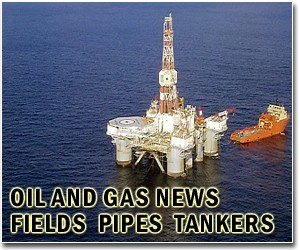
An oil spill off Brazil's coast is a wake-up call for the country's ability to deal with major oil emergencies as it prepares to tap potentially huge deep-water reserves, analysts said.
US oil giant Chevron Corporation said Thursday it had suspended its current and future drilling operations off Rio de Janeiro state after the oil slick traced to a 1,200-meter (4,000-foot) deep well it operated.
Brazilian authorities say the spill is now under control and that the spill has been reduced to two square kilometers (0.8 square miles).
"This is a wake-up call for us. Today, only one well is involved. The 'subsalts' (deep-sea reserves) will have 1,000. We must draw the lessons," Rio state's environment secretary Carlos Minc told foreign reporters Wednesday.
The subsalt fields, which national oil agency ANP says have reserves that could surpass 100 billion barrels of high-quality recoverable oil, are off the country's southeast Atlantic coast beneath vast expanses of ocean, bedrock and hot salt beds.
Brazilian authorities want the Chevron accident to serve as an example and the firm now faces a slew of fines from federal and Rio state authorities that together could exceed $145 million.
"The law allows foreign firms to search for and to tap the oil. But we are not a Banana Republic… We are the world's seventh-biggest economy and we want technologies" that provide increased protection, Minc said.
On Wednesday, Brazil suspended Chevron's drilling rights nationwide until safety conditions have been restored and it identifies the cause and culprits of the spill.
It also turned down the company's request to tap the subsalt deep-sea reserves.
"The Chevron accident shows that it is not easy to extract oil from the sea," said Adriano Pires, head of the Brazilian Infrastructure Center.
Currently, 80 percent of world oil production comes from land. But offshore output is steadily increasing.
"Brazil is the country were offshore production is the highest (95 percent of the total) and this will go even higher with subsalt" mining, said Pirest.
"Neither Brazil nor the rest of the world are prepared to respond quickly to an oil accident at sea. And with the subsalt, the problems will be worse because of the depth of the fields."
Those fields can be 5,000 to 7,000 meters (16,400 to 23,000 feet) deep.
Companies such as Brazil's Petrobras, a world leader in deep-water drilling, have developed sophisticated means to extract the oil, but procedures to cope with an oil spill and protect the environment "leave much to be desired," he added.
"To plug a leak or collect the oil takes time. Companies and government will have to exchange information on how to act," Pires said.
"To transform oil into wealth is not easy and is expensive," he noted, recalling that "Chevron shares have dipped 12 percent in the past few days while those of BP plummeted 20 percent last year."
But missteps can cause serious damage and even be fatal, such as the BP oil disaster in the Gulf of Mexico last year that killed 11 workers and triggered the worst oil spill recorded in the United States.
Alessandra Magrini, an energy planning professor at Rio Federal University (UFRJ-Coppe), told AFP that oil legislation was "too generic" and urged officials to "better prepare" oversight bodies such as ANP, the environment ministry and the Navy to react quickly to an accident.
Petrobras has state-of-the-art equipment to deal with accidents at sea, including a remote-controled underwater robot, but Magrini said supervisory agencies must be able to rely on real-time information and need more effective coordination.
"The national emergency plan was not activated. Criteria were set for fines but none exists to assess the damage caused," she added. "Brazil still has work to do ahead of subsalt mining."
