
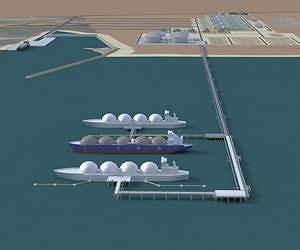
The West Australian government has granted environmental approval for Chevron's $26.5 billion Wheatstone liquefied natural gas project, Environment Minister Bill Marmion said.
"This is a huge development for Western Australia," Marmion said in a statement Tuesday of the proposed 25 million-ton-a-year LNG facility off Western Australia's Pilbara Coast.
At its peak, Wheatstone's construction workforce is expected to reach 3,000 with an additional 3,500 indirect jobs and billions of dollars in locally purchased goods and services, he said.
"The Wheatstone Project is set to become one of Australia's largest resource projects delivering energy, jobs and economic benefits to Australia," Melody Meyer, president, Chevron Asia Pacific Exploration and Production Co., said in a statement.
The approval was granted with 24 conditions aimed at protecting marine fauna, including whales and turtles.
Under the conditions, Chevron and its partners must contribute $13.9 million in environmental offsets and the project will need to reduce greenhouse gas emissions through offsetting about 2.6 million tons of reservoir carbon dioxide emissions a year.
Wheatstone is a joint venture between the Australian subsidiaries of Chevron, with a 73.6 percent stake; Apache, 13 percent; Kuwait Foreign Petroleum Exploration Co., 7 percent; and Shell, 6.4 percent.
The LNG plant still needs environmental approval from the federal government before it can move ahead.
Last month Chevron announced that the company and its partners signed a deal with Tokyo Electric Power Co. — operator of Japan's crippled Fukushima nuclear power plant — to deliver up to 3.1 million tons a year of LNG from Wheatstone for 20 years.
At that time, Roy Krzywosinski, managing director, Chevron Australia, said the front-end engineering and design phase for Wheatstone had been completed and that Chevron was on track to make a final investment decision on the project before the end of the year.
Chevron discovered Wheatstone in August 2004 and in March 2008 announced its intention to develop it as a greenfield onshore LNG and domestic gas project.
Shortly after Japan's earthquake and tsunami, Australian Energy and Resources Minister Martin Ferguson said "we are entering the LNG age," noting the disaster was likely to lead to increased demand for LNG and that Australia was well-placed to meet that demand.
Australian liquefied natural gas production is posed to increase three-fold by around 2020, boosting the country's economy by $38.5 billion by that time, the International Energy Agency says.
