
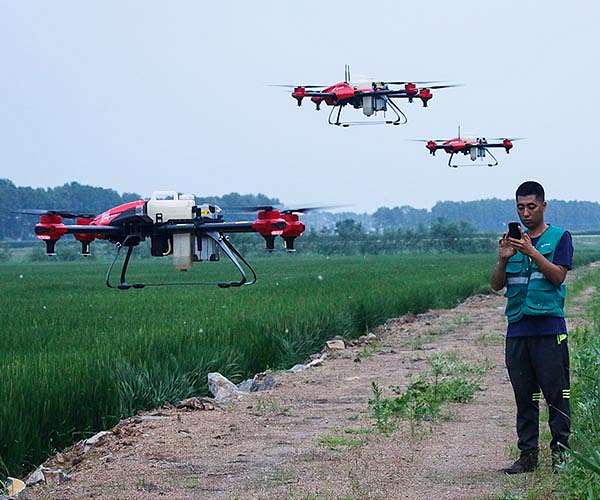
A recent study highlights the potential of crop switching to enhance agricultural resilience in China as climate patterns shift. Researchers recommend transitioning from maize and rapeseed to alternative crops in specific regions to improve environmental sustainability and food security.
China's food production has nearly doubled since the 1980s, primarily driven by intensified nutrient application and expanded irrigation. With food demand projected to grow further, researchers Qi Guan and colleagues utilized a dynamic global vegetation model to analyze the nation's agricultural system under different 21st-century climate scenarios.
The team developed models aimed at maximizing crop yields while curbing nitrogen leaching and water consumption. These scenarios were designed to minimize supply chain disruptions and ensure long-term food security, even under varying climatic conditions.
Under optimal crop distribution scenarios, productivity could increase by 14.1%, nitrogen leaching decrease by 8.2%, and water use drop by 24.0%. Northern China's warming climate and increasing summer rainfall make it a promising area for rice cultivation. Shifting maize away from arid regions could significantly reduce water usage.
The study suggests that drought-resistant wheat could flourish in the Northeast China Plain, while soybeans may thrive in northern and northwestern regions as well as the Yangtze Plain. Water-intensive crops like potatoes could be better suited to eastern and southern China. According to the researchers, coordinated national efforts in crop switching could deliver substantial environmental and productivity gains.
Improving future agricultural sustainability by optimizing crop distributions in China
https://academic.oup.com/pnasnexus/article-lookup/doi/10.1093/pnasnexus/pgae562
