
The "three represents" could some day be lumped in with "the four olds" if China's jargon-obsessed Communist Party heeds a call from the top for clearer communication.
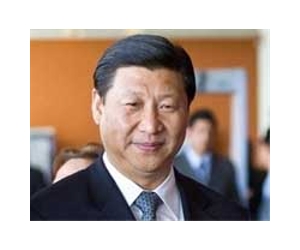
Xi Jinping, the vice president and heir apparent to China's leadership, made the plea in a speech to Communist cadres, saying that jargon walled the ruling party off from the country's more plain-spoken citizens.
Xi gave no examples in his attack on "empty words" at the party's main school for cadres, according to a report Thursday by the party's main print mouthpiece the People's Daily.
But he warned in the speech Wednesday that "unhealthy" writing or speech styles undermined party efficiency and prevented problem-solving. Officials, he said, should put "substance" in their words, Xinhua news agency reported.
China's Communist Party has had a penchant for coded catchphrases ever since revolutionary leader Mao Zedong. In the 1960s Mao railed against "the four olds" — old customs, culture, habits and ideas — in his quest to remake society.
His successor Hua Guofeng championed the "two whatevers" — adhering to whatever policies or instructions Mao gave, while later leader Deng Xiaoping seemed to state the obvious in calling for "seeking truth from facts".
Despite the end of China's radical era, propaganda output and official communications remain awash with jargon such as the mystifying "theory of the three represents" and "the scientific outlook of development".
The former was the signature theory of previous president Jiang Zemin and stood for more open party membership. The latter is current incumbent Hu Jintao's catchphrase — a call for sustainable economic development that actually has little to do with science.
Both are invoked regularly to support the party's policies and look unlikely to wind up in the dustbin of history anytime soon.
Share This Article With Planet Earth
