
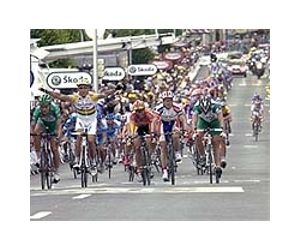
Participant Sports and EMS Global Tracking have announced that fans will be able to follow the progress of this year's 97th Tour de France online with near real-time tracking updates and animated replay videos.
The two companies have partnered to cover the race and will use EMS Global Tracking's SAT-202 terminals, which provide global two-way messaging using Inmarsat's IsatM2M, a two-way burst messaging service. The animated video functionality will allow fans to follow the race using virtually real-time map rendering, which will show the course and track the riders' movements on it.
The EMS Global Tracking satellite system's terminal and network performance capabilities were first tested in the 96th Tour de France in 2009, which allowed sporting fans to view charting progress and live video footage of the peloton and key groups at each stage.
Powered by EMS Global Tracking, fans were able to receive race-critical information in areas where connectivity is typically limited or unattainable, particularly during stages that took place through mountainous terrain.
"Last year, we were able to bring near real-time updates of the Tour de France to a worldwide online audience of more than one million," said Kevin Simmons of Participant Sports. "With the launch of the new iPhone application, I am eager to see how many fans will tune in to follow this year's event."
"Cycling fans around the world will be able to enjoy continuous updates on the race using our tracking technology," said John McQueen, senior director, Global Sales, EMS Global Tracking.
"Not only do fans have the ability to track current progress of the race at any time, but with this new iPhone app, they are now able to have access to this data regardless of where they are. Information provided by our SAT-202 terminal will enable updates to be posted to the official Tour de France iPhone application and the Versus "tour tracker" website, developed by Participant Sports."
Four IsatM2M devices will be placed on race organizer's vehicles and will follow the both the leading cyclists and the break-away groups as they separate from the main pack, which typically splits the field into separate racing groups. This approach will allow race officials and fans to track the distances between the groups stage-by-stage.
Share This Article With Planet Earth
