
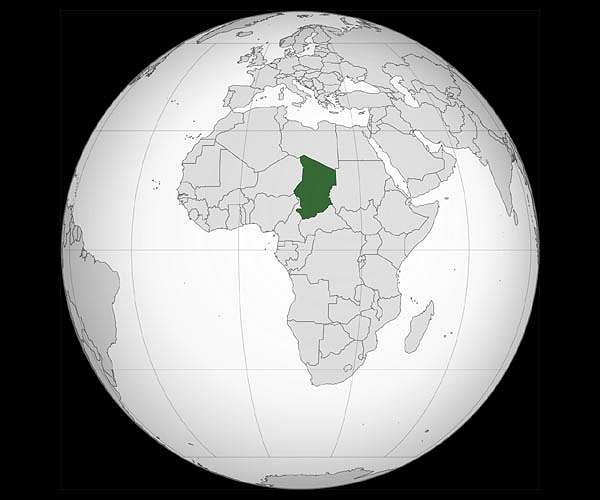
Chad's leader Mahamat Idriss Deby Itno on Wednesday declared a state of emergency as the country struggles to deal with exceptional flooding that has affected hundreds of thousands of lives.
The floods, caused by heavy rains in the south and central areas, have hit 18 of the country's 23 provinces and affected "more than a million people", Deby said in a television address, adding that no one had yet died as a result.
The flood water has "swallowed up more than 465,000 hectares of fields and 19,000 heads of livestock," he added.
"A state of emergency will be instituted to better contain and manage this natural disaster situation," Deby announced.
"The areas most at risk are the capital N'Djamena and surrounding areas," the president said, calling the situation "increasingly worrying".
Chad is the world's third poorest country, according to the benchmark of the UN's Human Development Index.
The United Nations says 5.5 million Chadians need "emergency humanitarian aid", while the World Bank says 42 percent of the 16 million population live in poverty.
"We have to provide shelter, basic necessities and health protection," Deby said.
"We have to thank the Almighty who has spared us the loss of life until now," he added.
He urged "friendly countries" and "technical and financial partners" to support the government's efforts.
The 38-year-old five-star general took the helm in April 2021 after his father, Idriss Deby Itno — Chad's iron-fisted ruler for three decades — was killed during an operation against rebels.
Chad floods leave victims in despair
N'Djamena (AFP) Oct 19, 2022 –
One of the poorest and most arid states in the world, the landlocked nation of Chad has been hit by exceptional floods that have affected hundreds of thousands of lives.
In the beleaguered capital of N'Djamena, a field of tents has sprung up to provide emergency shelter and victims are striving to salvage what they can from the ruins of their homes.
In Walia, a poor neighbourhood to the south of the city, dozens of homes were ravaged last week after the Chari River burst its banks following torrential rains, an AFP journalist saw.
Water levels rose by up to five metres (16.4 feet), which local officials said was unprecedented, and swept aside makeshift defences erected by desperate inhabitants.
"The flood defences gave way on Thursday at 8 am and my house was completely engulfed," said Antoinette Nemercie, a woman in her 30s standing up to her ankles in water.
She scrabbled around to pick up pieces of corrugated sheeting, tied them together and placed them in a canoe, which would take her family and their belongings to a safer place.
"People are going around the streets in boats, stealing property from wrecked homes," she said, explaining that looters had already taken jewellery, money and a canister of cooking gas from her house.
– 'Under water' –
On Monday, the side of the road leading from Walia to the capital was a desolate sight of mattresses, saucepans and crockery that people had retrieved from their homes.
"We don't have a place to stay, our belongings are in the street," said Marie Noelle Aziza. "I lost my money and gold. I have nothing left".
Since the end of June, more than 340,000 people in Chad have been hit by floods, according to a provisional UN report.
In the area around Walia, more than 60,000 people have affected, according to the authorities.
"Much of the district is under water," Mayor Mahamat Saleh Kerima said.
An elderly woman died in her home last week, but there were no other known casualties, he said.
He said 100 members of the police force had been tasked with evacuating residents.
Some people have found shelter with their families in the city centre, he said, while tents have been set up to accommodate almost 2,000 people.
The mayor said the local authorities had distributed bags and sand to inhabitants to provide makeshift floodwalls, and the government and NGOs had also pitched in.
But this was not enough — "the water levels this year were higher than in previous years," he said.
Ngartoim Ndojinga, a man in his sixties, said he had lived in the neighbourhood since he was a child and had never seen the river so high.
– Climate link –
Singambaye Djekounda of the National Meteorological Agency told AFP his organisation had predicted abnormal rainfall and warned of flooding in some areas.
"We asked the authorities to reinforce the dykes in N'Djamena but unfortunately, the appropriate measures weren't taken," Djekounda said.
The rainy season in the Sahel typically runs from June to September and routinely claims lives.
But this year, the devastation, and the rainfall, have been exceptional, say experts.
In neighbouring Niger, the poorest country in the world by the UN's development benchmark, 192 people died, more than a quarter of a million people were affected and 30,000 homes destroyed, according to figures released on October 6.
"All our studies say that these rains can be linked with climate change," Katiellou Gaptia Lawan, head of Niger's national meteorological agency, told AFP.
