
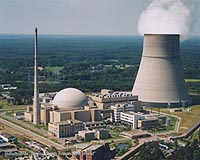
One of Germany's most modern nuclear power stations was shut down on Friday due to a technical fault, operator RWE said, less than three weeks after problems at another reactor hit the headlines.
The Emsland reactor in north-west Germany, which supplies around 3.5 million households, underwent an automatic shutdown at 3:00 am (0100 GMT), RWE said in a statement.
"We are looking into what activated the security system," a spokesman for RWE Power, a unit of RWE, told AFP. "At the moment we don't think that the disconnection will last more than two days."
In early July, the Kruemmel reactor near Hamburg was shut down after experiencing problems — not long after it had been reopened following two years of repairs.
This reignited the nuclear debate in Germany, which decided in 2000 under then chancellor Gerhard Schroeder to mothball its 17 reactors by about 2020 amid strong public opposition to atomic energy.
It also made nuclear a campaign issue ahead of September elections, with the Social Democrats (SPD) — junior partners in the governing coalition — and the Greens calling on consumers to boycott Kruemmel's Swedish operator Vattenfall.
Chancellor Angela Merkel's conservatives are keen on extending the life of some nuclear power stations, however, because they say it will help Germany meet its climate change goals and reduce dependence on oil and gas imports.
A survey published by ZDF public television on Friday suggested that the problems at Kruemmel had made nuclear power more unpopular in Germany, with 55 percent of respondents opposed to it, up from 40 percent a year ago.
Under the plans of the Schroeder government, Kruemmel is due to be shut down in 2016 and Emsland in 2020.
Just under 30 percent of Germany's electricity is generated with nuclear power, compared with more than 40 percent with coal and around 12 percent with renewables such as wind and solar energy.
Share This Article With Planet Earth
