
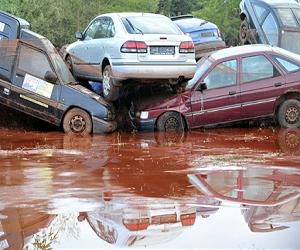
Hungary's cabinet on Wednesday visited the site of a deadly toxic sludge spill, as the death toll from the disaster rose to nine and an official said the threat of further spills had been averted.
The ministers arrived in Kolontar, one of the villages hardest hit by the ecological catastrophe, aboard a Hungarian army bus, escorted by police.
They were due to examine efforts to prevent a further spill, before holding a cabinet meeting later in the day in Veszprem, the nearest town about 20 kilometres (12 miles) away, a spokesman for Prime Minister Viktor Orban said.
The head of the regional disaster relief services, Tibor Dobson, said on local radio the danger of further toxic spills had been averted.
"The new system of dykes is complete: there will be no more catastrophes," he said.
At a press conference at 2:00 pm (1200 GMT), Orban was also expected to announce when production could resume at the alumina plant, belonging to the MAL Hungarian Aluminium Production and Trade Company.
On October 4, a reservoir of toxic residue at the plant in Ajka, 160 kilometres (100 miles) from Budapest, burst, sending a wave of toxic sludge through surrounding villages.
On Wednesday, disaster relief services announced that the death toll had increased to nine after an elderly person died in hospital of their injuries.
Some 150 people were also injured in the chemical spill, with 45 still hospitalised, including one in critical condition.
Meanwhile, the municipal court in Veszprem was due to decide Wedneday whether or not MAL's managing director Zoltan Bakonyi, who was brought in for questioning on Monday, should remain in custody.
On its official website, the government also announced that a new dam to prevent a feared second spill was ready.
Two additional dykes nearer the reservoir were still under construction but the foundations have been completed, it added.
"The crack in reservoir Nr. 10 has not moved and checks are being conducted regularly," the government said.
"The drinking water is safe but filter masks are required in the polluted area due to the high concentration of dust in the air," it added.
"Studies of the ground and the cleaning-up of fields have begun."
Share This Article With Planet Earth
