
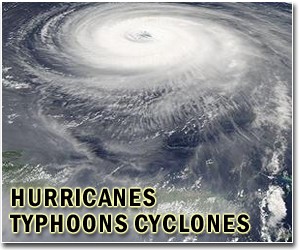
US forecasters said potent storm system Paula had developed into a hurricane Tuesday, with additional strengthening expected over the next 24 hours as it approaches Mexico's Yucatan Peninsula.
The Miami-based US National Hurricane Center said Paula was centered around 230 miles (370 kilometers) southeast of Cozumel, Mexico, with maximum sustained winds of 75 miles (120 kilometers) per hour for its 0500 GMT advisory — making it the ninth hurricane of the season.
Lashing Honduras with heavy winds and rains, the category one hurricane promised even greater devastation through the day Tuesday as forecasters predicted it could strengthen further.
The storm was moving northwest toward Mexico's Yucatan peninsula at 10 miles (17 km) per hour, US forecasters said, adding that a hurricane warning was in effect from Punta Gruesa to northernmost Cabo Catoche, near the tourist haven of Cancun.
A tropical storm warning, meanwhile, was issued by Honduras from Limon to the Nicaraguan border.
Paula raised the troubling prospect of renewed flooding in already saturated Central America and Mexico, after weeks of devastation from heavy rains.
The storm was expected to dump three to six inches (7.5 to 15 centimeters) of rain on parts of Nicaragua and Honduras and Mexico's Yucatan Peninsula.
"Isolated maximum amounts of 10 inches (25 centimeters) are possible. In areas of mountainous terrain these rains could cause life-threatening flash floods and mudslides," the hurricane center said in a bulletin.
Flooding and landslides have killed more than 300 people in Central America, left tens of thousands homeless and caused billions of dollars in damage in recent months.
Mexico has also been hit hard by a series of storms in an active hurricane season.
earlier related report
Flooding leaves scores homeless in Lagos
Lagos (AFP) Oct 11, 2010 –
Scores of slum residents in the Nigerian commercial capital Lagos have been left homeless by flooding from a river following last month's opening of a dam, residents and an official said Monday.
Officials have estimated that more than 400 homes and shops in the east of the sprawling city of some 15 million people were flooded after the Ogun River overflowed its banks.
A Lagos state official said the dam had to be opened in late September because allowing it to burst would have caused far more damage. Residents were warned in July, he said.
"Our advice to them now is that they should vacate the areas until further notice," said the special adviser to the Lagos governor on the environment, Sesan Olanrewaju.
Commuters still using the flooded Ikorodu-Ketu road in the area can spend six hours traveling the 12-kilometre (eight-mile) route.
"This is the worst experience I have ever had since I have been living in Ajegunle in the past 15 years," Sikiru Badamosi, 42, a furniture maker in one of the affected communities told AFP as he tried to salvage what remained of his property.
Flooding has also hit Nigeria's north this rainy season, destroying entire villages and huge swathes of farmland.
earlier related report
Nearly 450,000 evacuated in China's Hainan after floods
Beijing (AFP) Oct 11, 2010 –
More than 440,000 people have been evacuated in Hainan after the heaviest rains for decades inundated 90 percent of the Chinese island in the South China Sea, state media reported Monday.
Further downpours were forecast for Wednesday, threatening to intensify damage to homes, infrastructure and crops across the island, Xinhua news agency said, quoting Hainan's governor Luo Baomin.
The floods have affected 2.7 million people in 16 cities and forced schools to close, he said.
More than 3,000 houses have been destroyed by flooding and damage has been done to 1,300 roads, over 40 reservoirs and nearly 170,000 hectares of crops, the report said, citing the provincial civil affairs department.
According to the Hainan meteorological bureau, more rains are forecast to hammer the island on Wednesday and may hamper the relief effort, Luo added.
The torrential rains have been falling for more than a week and are the worst on the island off China's southeastern coast since 1961.
Share This Article With Planet Earth
