
India's commerce ministry called Friday for the imposition of anti-dumping duties on solar equipment imported from the United States, China, Taiwan and Malaysia, saying it was underpriced and hurting local industry.
The countries were selling the solar equipment at "below its normal value" and should face duties ranging from 11 US cents to 81 cents per watt of electricity generated, the commerce ministry said in a website notice.
"The domestic industry has suffered material injury due to dumping," the ministry's Directorate General of Anti-dumping and Allied Duties said in its recommendation.
The proposal comes as the solar manufacturing industry worldwide reels from overcapacity and falling profits, and sets Indian solar product makers against project developers.
India's renewable energy ministry has already voiced concern over imposing anti-dumping levies, saying they could derail many solar projects.
While India has cut in half solar generation costs in just a few years, the industry operates on wafer-thin margins.
Narendra Modi, leader of the right-wing Bharatiya Janata Party and due to be sworn in as premier on Monday following his sweeping general election victory, has been a strong champion of solar power.
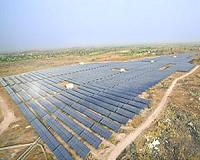
Modi's home state of Gujarat where he was chief minister for over a dozen years is home to India's biggest solar park.
The anti-dumping recommendation now goes to the finance ministry which has three months to consider it. Normally the ministry does not reject the anti-dumping agency's proposals.
The recommendation threatens to further stoke trade tensions between the United States and India, already at loggerheads over many commercial issues.
Last year, the United States took India to the World Trade Organisation over its solar energy plan, accusing New Delhi of discriminating against US companies.
India insists its solar power plan, aimed at reducing reliance on trade deficit-ballooning fossil-fuel imports and cutting hefty carbon emissions, complies with WTO rules.
New Delhi launched its solar energy mission in 2010 with a target of generating 20,000 megawatts of grid-connected solar power by 2022.
Its solar power capacity stands now at just over 2,000 megawatts.
The anti-dumping complaint was filed by solar equipment manufacturers which charged their US, Chinese, Malaysian and Taiwanese rivals benefit from state subsidies and were exporting equipment to India at "ridiculously low prices" and "bleeding" local industry.
Local manufacturers say the low prices being charged by foreign rivals have left a big chunk of Indian solar equipment-making capacity idle.
Supporters of duties say they could spur foreign solar equipment manufacturers to set up in India to cater to the local market and create jobs as occurred in India's large automobile sector.
