
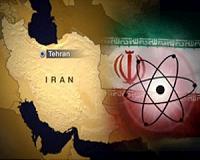
Iran conducted work "relevant" to developing nuclear weapons at least until late 2003, the UN watchdog said Wednesday, but it added there was no evidence such activities continued beyond 2009.
The long-awaited findings come five months after Tehran and six world powers agreed a landmark deal to end the standoff over Iran's atomic programme.
"The agency assesses that a range of activities relevant to the development of a nuclear explosive device were conducted in Iran prior to the end of 2003 as a coordinated effort, and some activities took place after 2003," the International Atomic Energy Agency said in a report concluding a lengthy probe.
It stressed though that "these activities did not advance beyond feasibility and scientific studies, and the acquisition of certain relevant technical competences and capabilities" and that there were "no credible indications" of any suspect activity after 2009.
The restricted report, seen by AFP, also said that the IAEA found "no credible evidence of the diversion of nuclear material" such as enriched uranium or plutonium towards such activities.
The IAEA has long suspected that such work — known as the "possibile military dimensions" (PMD) of Iran's civilian nuclear programme — may have taken place, and Tehran has for years rejected the accusations out of hand.
Under the deal agreed with major powers in July, Iran will drastically scale back its civilian nuclear programme in exchange for relief from international sanctions, which are expected to be lifted in early 2016.
As part of that accord, Iran also undertook to engage more with the IAEA in order to clear up the allegations.
Iran has warned that it will not implement key parts of the July deal with major powers unless the PMD file is "closed", something which the IAEA's board of governors is expected to discuss at a meeting on December 15.
In response to Wednesday's report, the United States said it was ready to take the next step in implementing the deal, adding that Iran had cooperated adequately with investigators.
"The IAEA report is consistent with what the United States has long assessed with high confidence," State Department spokesman Mark Toner told reporters.
– Forgeries –
Iran has always denied seeking or ever having sought nuclear weapons, saying the activities probed by the IAEA are either for non-nuclear uses or that the watchdog's claims are based on forgeries.
The Vienna-based IAEA says that its information comes from at least 10 countries — which the watchdog refuses to identify — as well as its own information and open-source material such as satellite imagery.
Abbas Araghchi, Iran's deputy foreign minister, said the "invalidity of previous claims has been proven" and that the IAEA had confirmed its activities were peaceful.
"The maximum thing that the agency says in its last paragraph is that there were some studies or assessment of possibilities — which is not correct… but the agency's conclusion is that some studies had been done but it didn't continue," he told state television.
Kelsey Davenport, analyst at the Arms Control Association, said critics of the July deal will try and use the IAEA's findings to try and derail the "historic" agreement.
But she said the report's findings were "not surprising" and highlighted the IAEA's conclusion that no suspicious activities have taken place since 2009.
"Iran's nuclear programme will remain under the agency's microscope for years to come," she told AFP.
"If Iran abides by the limitations and monitoring under the agreement, the international community will have continued assurance that Iran's nuclear programme is entirely peaceful."
US ready to move ahead with Iran deal after UN bomb report
Washington (AFP) Dec 2, 2015 –
The United States said Wednesday that it was ready to take the next step in implementing the Iran nuclear deal after an IAEA report on Tehran's weapons program.
State Department spokesman Mark Toner said that the UN watchdog had confirmed Washington's long-standing allegation that Tehran had once been working on a nuclear bomb, but he added that Iran had cooperated adequately with IAEA investigators.
"The IAEA report is consistent with what the United States has long assessed with high confidence," Toner told reporters.
"We made this public first in our 2007 National Intelligence Estimate, and that is that Iran had a nuclear weapons program that was halted in 2003."
But, Toner said, now that the IAEA had been able to study the program and had found no evidence that it had continued beyond 2009, the United States was ready to move ahead.
"The IAEA has confirmed that Iran met its commitments to provide responses to IAEA requests under the roadmap for clarification of past and present issues," he said.
Washington and the other members of the P5+1 contact group — Britain, China, France and Russia, plus Germany — will submit a motion to the IAEA board on December 15 to close the issue of what has been called the "possible military dimensions" of Iran's program.
"And then, after that, we can focus on implementing the JCPOA," Toner said, referring to the Joint Comprehensive Plan of Action agreed between Iran and the P5+1 powers in July.
Under the deal, Iran will scale back its nuclear enrichment program dramatically — a program it has always maintained was for purely peaceful purposes — and submit its nuclear sites to international inspection.
In return, outside powers will end some of the international sanctions that have severely squeezed the Iranian economy.
