
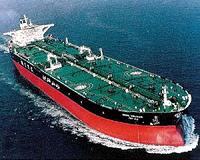
Iran will decide for itself how much oil it exports and strives to reach the highest levels possible, Oil Minister Bijan Zanganeh said.
Iran secured relief from some economic sanctions in exchange for curbing its nuclear research activity under the terms of a November agreement reached with the five permanent members of the U.N. Security Council — the United States, Russia, China, France and Great Britain — plus Germany.
The oil minister said Iran would work to export as much oil as possible, despite a limit of 1 million barrels per day imposed under the November arrangement.
"Iran will not accept any numbers and figures regarding the volume of its crude oil export that are dictated from elsewhere," he said Thursday.
Iran in January and February reported export levels above the 1 million bpd mark, the International Energy Agency reported.
"We decide on the volume of oil exports by ourselves," the minister said.
Iran is the fourth-largest crude oil producer among members of the Organization of Petroleum Exporting Countries. In its latest monthly market report, OPEC said Iran produced 2.78 million bpd in March, up about 0.6 percent from the previous month.
Iran nuclear talks: tricky issues to watch
Vienna (AFP) May 11, 2014 –
Iran and six world powers will begin their latest round of nuclear talks in Vienna on Tuesday when they start drafting the text of a comprehensive and potentially historic deal.
In a nutshell, such an accord would reduce the scale of the Islamic republic's atomic programme so as to render any dash to make nuclear weapons extremely difficult and easily detectable.
In return, all UN Security Council sanctions and additional, unilateral Western restrictions targeting Iran's lifeblood oil exports would be lifted.
Here is a rundown of the main issues that have to be resolved before the deadline for a deal on July 20, when a six-month interim agreement reached in November 2013 expires.
Enrichment:
Comments from both sides indicate that negotiators are still some way apart on the issue, which is the big one.
The "enrichment" of uranium makes it suitable for peaceful atomic uses such as power generation and for medical isotopes, but when highly enriched it can go in a nuclear weapon.
Iran currently has some 20,000 centrifuges — machines that enrich — including around 1,000 faster IR-2M models. Some 10,000, all older IR-1 models, are actually in operation.
Under the November deal, Iran suspended the enrichment of uranium to 20-percent purities — a short step from weapons-grade (90 percent) — but has continued low enrichment (to five percent).
The powers want Iran to slash the number of centrifuges, possibly by shutting down the Fordo facility, or by agreeing a cap on the output per centrifuge.
Iran's research into newer centrifuges up top 15 times faster will also have to be addressed, experts say, as will Iran's enriched uranium stockpiles, enough for several bombs if purified further.
Arak:
Under the November deal, Iran froze construction of a new nuclear reactor at Arak, which once running could provide Tehran with weapons-grade plutonium.
Once completed, Iran could extract from Arak's spent fuel between five and 10 kilogrammes (10-20 pounds) of plutonium a year, enough for one nuclear weapon, analysts estimate.
The reactor, long plagued by delays, would have to be running for 12-18 months before plutonium could be obtained, and to extract it would need an additional facility that would be tough to hide.
In April, Iran's nuclear chief Ali Akbar Salehi said the issue was "virtually resolved" after Tehran made proposals to change the design of the reactor.
Inspections:
The International Atomic Energy Agency (IAEA), the UN watchdog, regularly inspects Iran's nuclear facilities and painstakingly accounts for every ounce of nuclear material.
Under November's deal, the IAEA was given more oversight including daily inspections of certain sites, access to places such as uranium mines and more details on Iran's facilities and plans.
The powers want enhanced inspections to be made permanent, possibly by Iran adhering to the so-called "additional protocol" of its inspections agreement with the IAEA.
Possible military dimensions:
The powers also want Iran to answer the IAEA's long-standing questions about evidence suggesting that before 2003, and possibly since, Tehran looked into developing nuclear weapons.
Iran has rejected such claims, saying they are based on faulty intelligence from the CIA and Israel's Mossad — intelligence that it has not been allowed to see.
Iran has promised to explain to the IAEA its use of certain detonators that could be used in a nuclear weapon — they also have non-nuclear applications — by May 15, but this is only the beginning.
Ballistic missiles:
The powers also want a final deal to cover Iran's development of ballistic missiles, which could in theory carry nuclear warheads. The UN Security Council called in 2010 for a halt.
Iran says that its missile programme should not be part of the talks because they have nothing to do with its nuclear programme, which it insists is purely peaceful.
