
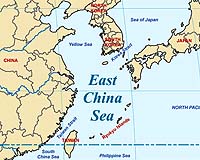
Japan and China failed to break an impasse Wednesday in a spat over lucrative gas fields in the East China Sea but agreed to keep talking amid a recent easing of tension between the countries.
Asia's two largest economies, which are also among the world's biggest energy importers, held their 11th round of talks since 2004 in a bid to resolve a row over their maritime boundaries.
The two nations earlier eyed a goal of working out concrete measures for joint development by late this year but the chances of a deal look slim.
"We had very serious and frank negotiations but have not yet reached an agreement," senior foreign ministry official Kenichiro Sasae, who headed the Japanese delegation, said on the sidelines of the talks.
"We will do our best to achieve the initial goal" to solve the issue this autumn, he said.
After the one-day session, another Japanese foreign ministry said that Tokyo had proposed holding new talks by the end of the month in Beijing.
"The gap still exists," the official said. "We confirmed that we would continue to negotiate, while recognising that the situation is severe."
The official, speaking on customary condition of anonymity, said Japanese Prime Minister Yasuo Fukuda would likely discuss the gas issue when he meets Chinese Premier Wen Jiabao next week during a regional summit in Singapore.
Wen paid a rare visit to Tokyo in April where he called for friendly ties between Japan and China, whose relations have been marred in recent years by bitter disputes including over wartime history.
During the visit, Wen called for the two countries to resolve the maritime row peacefully but China has stood by its territorial claims.
Last month Japan's chief government spokesman pinned the blame for the continued impasse on China, saying it had not made "a practical and full-fledged proposal."
Beijing hit back, saying it was "totally unreasonable" for Japan to blame it.
China began drilling in the gas-rich area in 2003, having rejected a maritime border which Japan takes as the starting point for discussions.
Beijing says its economic zone stretches nearly as far east as Japan's Okinawa island chain.
Fukuda, who assumed the premiership in late September, is known for his conciliatory views towards China. He is expected to visit Beijing later this year although no date has been set.
Amid the recent thaw in relations, Japan in August hosted a Chinese defence minister for the first time in nearly a decade.
The minister, General Cao Gangchuan, called for the first-ever goodwill visit by a Chinese warship to Japan, an idea initially agreed upon in 2000 but never realised.
Japan is arranging the port call in November or December in line with a Chinese request although the exact date is yet to be decided, an official said.
The Nikkei economic daily said Wednesday that the warship would make a port call in Tokyo between November 28 and December 1.
