
Japan outlined a plan Friday to develop satellites within five years that could quickly detect a ballistic missile or rocket launch from space using infrared sensors.
A task force under Prime Minister Taro Aso released the paper as Japan readied for North Korea's rocket launch. Pyongyang has said it will launch a satellite over Japan some time between Saturday and Wednesday.
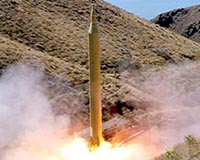
Washington, Seoul and Tokyo believe Pyongyang's real purpose is to test the launch vehicle — a Taepodong-2 intercontinental ballistic missile which could reach Alaska or Hawaii — in defiance of a 2006 UN resolution.
Japan already has four spy satellites in orbit — launched after North Korea fired a ballistic missile over Japan in 1998 — including one that allows Tokyo to monitor any point on Earth once a day.
But the task force called for the development of infrared sensors on satellites that would detect heat from a missile's blast-off and provide immediate warning, faster than the images taken by spy satellites.
"The use of space development serves to strengthen security guarantees. It will advance in the fields of information-gathering and surveillance," the cabinet's space development strategy headquarters said in the plan.
The basic plan also proposed the use of space technology for monitoring the sea to detect smuggling, illegal fishing and piracy.
Japan last May passed a law allowing the use of space programmes for defence, reversing a decades-old policy amid increasing concern about military threats in the region including North Korea.
The proposals, which are set to be finalised in May, came as Pyongyang prepared to launch its rocket between April 4 and 8.
Tokyo has put its military on high alert and deployed land and sea-based guided missile interceptors to shoot down an errant rocket or its debris if they should head for its territory.
