
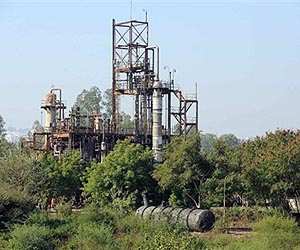
An Indian court has questioned industrial permits issued on the basis of environmental impact studies by private consultants in the pay of project proponents.
Supreme Court Chief Justice S.H. Kapadia, hearing a case challenging approvals granted to French company Lafarge to mine limestone, likened the practice to "paying the piper to call the tune," Inter Press Service reported Friday.
Kapadia noted that every environmental impact assessment report that had been placed before the bench was produced by agencies hired by Lafarge. It was unlikely that a "project proponent (private company) would pay a packet of money to get an adverse report," Kapadia said.
Environmental activists welcomed Kapadia's views on the way such EIA studies are carried out, expected to have serious implications for investors planning to set up environmentally sensitive industries.
"An EIA should be carried out and approved at the planning stage and not after land has been acquired and loans taken from banks, as is being done in this country," Ravi Agarwal, who leads the prominent environment activist group Toxic Links, said.
M.H. Qureshi, former professor of geography at the center for the study of regional development at the Jawaharlal Nehru University in New Delhi, said environmental studies are "seen as a perfunctory exercise."
"Agencies hired by private players rarely take into account the interests of important stakeholders such as people living close to a planned project," Qureshi said.
Kapadia has suggested "huge sums" spent on private consultants should be channeled into setting up a government infrastructure capable of carrying out reliable EIAs.
Share This Article With Planet Earth
