
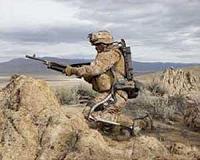
Lockheed Martin announced plans to explore the military exoskeleton market after licensing bionic augmentation technology from B-Temia.
By securing legal permission to use the product for defense-related applications, the company said it can use the technology to supplement its FORTIS industrial exoskeleton project. The effort aims to drastically reduce the workload for military and industrial personnel.
"This technology offers a pathway to increased loadbearing and greater agility for our FORTIS industrial exoskeleton," Lockheed Martin's Glenn Kuller said in a press release. "It can also help to solve existing limitations of powered exoskeletons for our military and first responders. We're excited about the potential we see here."
FORTIS technology is designed to make labor easier by transferring pressure through the exoskeleton to the ground in a process Lockheed Martin says makes heavy tools "weightless". The product can be used in standing or kneeling positions, and uses a tool arm to reduce muscle fatigue and boost productivity.
Lockheed Martin adds the lightweight system requires no external power to operate, and can boost military capabilities by enabling soldiers to carry more equipment over longer distances.
Facebook launches digital assistant 'M' in US
Facebook on Thursday launched its digital assistant named "M" for US users of its Messenger application, ramping up the social network's efforts in artificial intelligence.
For users of the messaging platform, M will pop up and suggest "helpful actions" in the chat window.
The move is seen as the first step in a broader launch of the digital assistant to compete against services from Goo … read more
