
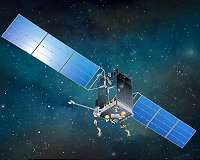
Up until now, we've lived in an era of "one and done" spacecraft. Barring a few notable exceptions, spacecraft launch alone, operate alone and are decommissioned alone. In an average year, several billion dollars' worth of satellites that could be refueled or repaired are retired because there is no way to service them in space.
On Jan. 30, 2018, NASA will host a satellite servicing industry day at NASA's Goddard Space Flight Center in Greenbelt, Maryland, as part of ongoing efforts to change that paradigm. The all-day meeting will focus on technology for building in-orbit servicers and incorporating compatible servicing features and devices on future satellites.
A new era is upon us. NASA continues to develop satellite servicing technologies to make refueling, fixing and upgrading satellites in space possible. NASA's Restore-L project will demonstrate technologies for rendezvous, inspection, repair and refueling of a client satellite in orbit. These technologies will allow fleet managers to call on robotic mechanics to diagnose, maintain and extend the lifespan of their assets.
Key to NASA's plan for making satellite servicing ubiquitous is the transfer of servicing technologies to interested U.S. companies, in tandem with development, to help jumpstart a new domestic commercial servicing industry with a robust fleet of servicers.
"NASA recognizes the best way to create a competitive market and position the U.S. as the global leader in satellite servicing is through technology transfer," said Benjamin Reed, the deputy director of Goddard's Satellite Servicing Projects Division (SSPD).
The upcoming industry day will offer attendees access to an updated technology catalog with over 200 items, presentations about the latest technology developments by SSPD subject matter experts and a tour of Goddard's Robotic Operations Center where the technologies are tested. Attendees will have access to NASA's programmatic, technical and operational expertise in satellite servicing with opportunities to engage in discussions about potential public-private-partnerships.
Some technologies NASA will discuss and make available include:
+ Relative navigation system
+ Robot arm and software
+ Tool drive system and tools
+ Fluid transfer system
+ Servicing avionics and software
For cooperative servicing, SSPD will offer information about rendezvous/capture decal technology and the Cooperative Service Valve.
In addition to the Restore-L project, SSPD will cover two of its technology maturation projects that use the International Space Station to develop crosscutting servicing technologies – the Robotic Refueling Mission 3 (RRM3), which is developing and demonstrating technologies for cryogen and xenon transfer, and Raven, a technology demonstration of state-of-the-art relative navigation capabilities.
The first formal iteration of this technology transfer campaign took place on April 19, 2017. The successful industry day drew about 30 companies interested inSSPD's extensive technology catalog.
Future industry days are slated to be held every six to eight months. Companies interested in attending the Jan. 30 industry day should contact Mary Reph at [email protected].
Pentagon Challenged to Procure a New Satellite in Less Than 12 Years
Twelve years. That's how long it can take the Pentagon to plan, design, build and launch an on-orbit satellite. By contrast, satellite communications providers like Intelsat can get a new telecommunications satellite from the drawing board to service in around 36 months. It's … read more
