
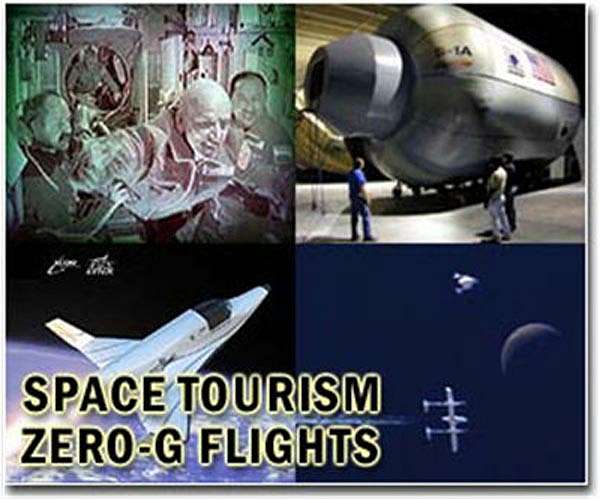
Space tourism is no longer a distant dream, floating on the horizon of human imagination; it is a tangible, rapidly evolving industry. Imagine a future where space travel is just another exotic vacation option for the rich – that's the vision driving entrepreneurs like Musk, Bezos, and Branson, who are wagering that the benefits of space exploration will outweigh the inevitable legal squabbles. As commercial space travel gains momentum, it's saddled with a pesky paradox: just as captivating opportunities arise, so do equally pressing challenges and regulatory hurdles. Now that we've got this spark of innovation, how do we fan the flames without letting bureaucracy snuff it out? Where does daring innovation end and social responsibility begin – and how do we forge a consensus among nations about what's acceptable and what's not?
The Emergence of Space Tourism
Space tourism has already begun its rise. In 2021, Virgin Galactic's Richard Branson and Blue Origin's Jeff Bezos launched themselves and their crews into suborbital space, demonstrating that space travel isn't just for astronauts anymore. These missions were symbolic not only for the industry but also for a future where space travel could become a recreational pursuit, opening the skies to those who can afford a ticket with a price tag upwards of $250,000.
Yet, while such feats are captivating, space tourism introduces novel challenges in terms of verification laws and policies. This includes age verification laws, as in social networks, compliance control laws, etc. Unlike air travel, which operates under an established international regulatory framework, space tourism is venturing into a domain where rules are sparse, outdated, or altogether non- existing. Governments, businesses, and international bodies are now tasked with building a legal infrastructure from the ground up, a task that's as daunting as it is necessary.
Current Legal Framework
The Outer Space Treaty (OST) of 1967 remains the cornerstone of international space law. Ratified by over 100 countries, including the United States, Russia, and China, the treaty stipulates that space must be used for peaceful purposes and that nations are responsible for their activities in space, including those carried out by private companies. However, the OST doesn't offer detailed regulations for commercial activities such as space tourism. It was crafted in an era where private spaceflight was unimaginable, and the focus was on governmental space exploration.
In the absence of a comprehensive international legal framework, individual countries have begun crafting their own regulations. The United States, for instance, regulates commercial spaceflight under the Commercial Space Launch Act (CSLA), which grants the Federal Aviation Administration (FAA) authority over private space travel. The FAA issues licenses for space launches, but here's where things get tricky: as part of its regulations, the FAA requires space tourists to sign informed consent waivers, acknowledging the risks involved and essentially absolving companies of liability in the event of an accident.
But is that enough? What happens if a space tourist is injured or killed in space? Could a family seek legal recourse on Earth, or would the vacuum of space also vacuum away any legal responsibility? These questions remain unresolved in many respects.
Risks and Challenges
Risks – they'e inherent in any adventure, but when it comes to space, the stakes are exponentially higher. Space tourism is dangerous, and no matter how well prepared companies are, there are always unknowns. In 2014, a Virgin Galactic test flight ended in disaster when the spacecraft broke apart, killing one pilot and severely injuring another. Even with informed consent and strict safety regulations, the risks of space tourism raise serious ethical and legal concerns.
One key question is the matter of liability. Who is responsible when something goes wrong? Currently, most spacefaring nations have passed liability onto the space tourists themselves, but is this an adequate solution? Should governments be more involved, or should we rely on private companies to police themselves?
International cooperation is another looming challenge. Space has no borders, and neither do the accidents or incidents that may occur in orbit. If a spacecraft from the United States collides with debris owned by Russia, who pays for the damage? What legal recourse is available if a space tourist onboard is injured as a result? These are not hypothetical questions; they are real legal dilemmas that will need to be addressed as space tourism continues to grow.
Opportunities in Space Tourism
Yet, despite these hurdles, the opportunities in space tourism are enormous. According to a report, the space tourism industry could be worth $3 billion annually by 2030. More than just ticking the boxes for adventure-seekers, commercial space travel could trigger an economic boon in unexpected areas – think luxury space vacations, moonbases, and spacecraft servicing stations. We are at the dawn of a space economy, where tourism is the tip of the iceberg.
The possibility of groundbreaking findings in science and education is definitely within our grasp. As more individuals and organizations join the space party, the rate of discovery will accelerate – think explosive breakthroughs, dazzling technologies, and insights that'll change the game. Imagine tourists conducting scientific experiments on the International Space Station or even on future lunar bases.
As space tourism evolves, so too will job opportunities . Radical new careers will burst onto the scene, from astronauts-turned-chefs whipping up delicious meals in zero gravity to space-faring tour guides and visionary engineers crafting habitats for the cosmos.
A Balancing Act: Regulating Without Limiting
The challenge, therefore, is one of balance. Space tourism is bursting at the seams – but can we harness its wild energy without choking off its momentum? The regulatory tightrope is a tricky one to walk. Too much red tape and progress grinds to a halt, but too little oversight and we invite trouble. Balancing act? Governments and international organizations must work hand-in-hand to create a framework that boosts growth while shielding citizens and promoting fairness.
The legal frontier of space tourism is wide open, and like the explorers who ventured into uncharted waters centuries ago, we are at the mercy of the unknown. But if we approach this new age with careful consideration, collaboration, and a commitment to ethical progress, the opportunities – both legal and commercial – are as vast as the universe itself.
Final Thoughts
As thrilling as the promise of space tourism is, the legal, ethical, and regulatory challenges we face are daunting. As we forge ahead into uncharted territory, a trifecta of innovative thought, global teamwork, and flexibility will be the trio that takes us farthest. Right now, space tourism exists in a legal gray area. A project that's still taking shape, with finishing touches being added daily. The industry is a crapshoot, folks – it's equal parts gamble and opportunity.
