
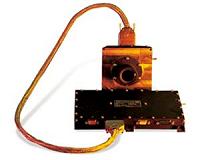
Terma has supplied four of a series of 13 new generation Star Camera units to satellite manufacturer Surrey Satellite Technology Ltd. with an option for an additional 12 units. The star cameras will be fielded on the civil meteorological FORMOSAT-7/COSMIC-2 Program.
It is a joint constellation metrological satellite mission between Taiwan and the United States for observing and monitoring the global meteorology, climate, and ionosphere, managed by National Space Organization (NSPO) of Taiwan in collaboration with the U.S. meteorological Institute National Oceanic and Atmosphere Administration (NOAA).
In 2013 Terma was contracted to supply their new generation of Tracker Heads and baffles for the mission by Surrey Satellite Technology Ltd. Two cameras will be mounted on each satellite.
Based on extensive experience with Star Trackers and sensors Terma's new generation of compact cameras use an aspherical optics design. The use of aspherical lenses and extreme absorbing opto-mechanical surface coatings allow a very compact baffle design to provide the required reduction of the disturbing sun light on the focal plane. Star Trackers normally operate in full sunlight and therefore an efficient subduing of the sun's light is required in order to see the stars.
The new camera type is optimized for cost, size, and weight. It only weight one quarter of Terma's former generation of Star Tracker and has thus extended the applications towards considerably smaller satellites.
The Star Camera 2014 is designed and developed with a high degree of flexibility meaning that customers can chose the camera head with or without computer. Onboard the FORMOSAT-7 satellites the cameras will be connected directly to the satellite's central computer, which is equipped with software for pattern recognition of the celestial vault.
A Star Tracker is used to precisely determine the satellite's orientation in its position. In the computer, a huge amount of constellations (patterns) are stored. When there is a match between what the camera sees and a stored pattern, you know exactly how the satellite is oriented, which for example is essential for the reliability and usefulness of Earth observations from satellites.
