
VTT Technical Research Centre of Finland examined, as part of the EU's Reffibre project, whether new industrial applications could be developed for various types of sludge and fly ash generated by the paper and board industry.
Laboratory tests showed that these side streams can replace up to 50% of oil-based polypropylene. They can be used as a raw material in plastic composites made using injection moulding and extrusion.
Large quantities of various side streams are created during the manufacture of paper and cardboard. Part of these can be used instead of natural aggregates as a raw material in concrete or asphalt, or in construction. Large amounts of side streams still end up in landfills and incineration.
Side streams could be used to lower composite manufacturing costs, reduce the environmental impacts of production, and lower the total amount of waste. This would also reduce the production of oil-based plastics.
Laboratory tests showed that 50% of the raw-materials in injection-moulded composite could come from paper and board industry side streams. The amount of side streams has an effect on the product's properties: strength, stiffness, heat resistance, appearance and the texture of the surface.
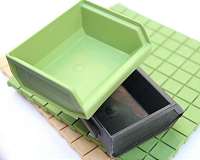
During the project, Plastec Finland Oy and Wiitta Oy produced floor tiles and storage containers, of which side-streams accounted for 30%. New applications are continually being sought – in the future, they may include pallets and crates, for example.
The possible legal restrictions still have to be explored prior to the product-specific use of side-streams in composites.
New pop-up strategy inspired by cuts, not folds
Origami-inspired materials use folds in materials to embed powerful functionality. However, all that folding can be pretty labor intensive. Now, researchers at the Harvard John A. Paulson School of Engineering and Applied Sciences (SEAS) are drawing material inspiration from another ancient Japanese paper craft – kirigami.
Kirigami relies on cuts, rather than folds, to change the structure … read more
