
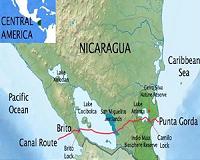
Nicaragua said Tuesday it would not make a pledge to fight global warming as part of the Paris climate talks, arguing that to do so would let rich countries off the hook.
It was the first outright refusal among the 195 nations attending the negotiations, which aim to craft a global pact to cut climate-harming carbon emissions.
"We are not going to present a 'national contribution' on a voluntary basis because it would kill the concept of historic responsibility" of large polluters, Paul Oquist, head of the Nicaraguan delegation, told AFP.
He said five other countries — Venezuela, Bolivia, Argentina, El Salvador and India — shared his view on the question of responsibility being placed on nations that historically emitted the most pollution.
"You have to affect these large emitters and they are those who are historically responsible," said Oquist. "We're not trying to shirk our role, but we're not going to participate and become accomplices."
So far, 183 nations have put forth voluntary plans to cut their emissions, which will be the basis for the hoped-for post-2020 agreement in Paris.
Oquist, who first revealed Nicaragua's position to a climate news service on Monday, said the UN should instead set quotas for nations based on the quantities of greenhouse gases emitted since the start of the Industrial Revolution.
Rich countries acknowledge their responsibility in today's warming.
But they note developing countries now account for the majority of greenhouse-gas emissions today, thanks to a surge of economic growth in emerging giants over the last decade or so.
Those emissions will be the main cause of warming tomorrow, which scientists say could be catastrophic on current trends, according to this argument.
Divided Belgium fails to agree climate targets
Brussels (AFP) Dec 1, 2015 –
When the Belgian government said recently it was hoping for a climate deal it wasn't talking about the UN talks in Paris — it was talking about its own troubles.
Arguments between the French and Flemish speaking regions of an increasingly divided country meant Prime Minister Charles Michel went to Paris without any agreement.
They are split over how much each region — the poorer French-speaking Wallonia and the richer Flemish-speaking Flanders — should make to meet Belgium's commitments.
"This doesn't give a good image of Belgium," deputy prime minister Kris Peeters, a Flemish lawmaker, told VRT radio on Tuesday.
He added that a deal was possible "if everyone shows goodwill."
Michel said as he arrived in Paris that Belgium would pay 50 million euros a year in climate aid to developing countries until 2020.
Belgium is also committed to reduce its emissions by 15 percent by 2020 compared to 2005 and to make 13 percent of its energy from renewables.
But local media and activists have criticised Belgium for failing to reach an agreement within Belgium itself — a country which already has four environment ministers for Brussels, Wallonia, Flanders, and the federal government.
They have still not agreed on a breakdown of costs for the adoption of the measures that Belgium has promised, or of how to share the proceeds of carbon quotas.
French-speaking lawmakers have accused the Flemish nationalist N-VA party of "playing politics", after a deal accepted by Wallonia and Brussels was knocked back by Flanders.
Belgian authorities have recently faced criticism in the wake of the Paris attacks for a lack of coordination in security issues.
Belgium is a relatively modern invention, born in 1830 as an independent state to act as a buffer between France and Germany.
It is now an uneasy mix of a Flemish-speaking, more conservative north and a French-speaking, poorer left-leaning south with a small German-speaking population near the border.
