
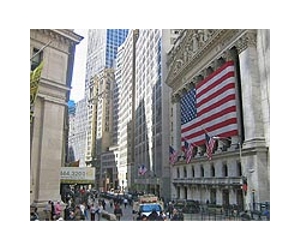
Stocks prices have enjoyed a lot of help in recent months.
A moderate recovery — 3 percent gross domestic product growth expected this year and next — and more robust growth in Asia are good for the profits of large U.S. multinationals.
Standard and Poor's 500 companies earn about half their profits abroad and the economic recovery is strongest in China, where U.S. companies are well positioned.
Add a great interest-rate environment.
The Federal Reserve is holding short rates near zero.
The Fed purchased and now holds well more than $1 trillion in Federal National Mortgage Association — Fannie Mae — and other mortgage-backed securities. This helped keep long rates down until the market for loan-backed securities, devastated by the credit crisis, rebuilt.
The Fed is ending this quantitative easing in the long debt market but investor comfort is improving regarding the safety of government agency bonds. The market for loan-backed securities created by commercial banks appears to be re-emerging, too.
Corporate bonds are finding ready buyers again and investors are demanding lower premiums for risks on long-term company debt.
Mortgage, corporate and long Treasury rates will increase with the end of quantitative easing but not a lot until the Federal Reserve pushes up the federal funds rate and the whole yield curve with higher short rates.
Don't look for that to happen soon.
Growth isn't yet strong enough in the United States to pull down unemployment. For all the chatter about the Fed injecting too much liquidity and instigating inflation, consumer prices, less petroleum products, remain remarkably tame.
The Fed can focus on employment and wait until later in the year to address price stability.
It isn't expected to start raising the federal funds rates before summer or perhaps not until after the November elections.
For now, short rates will stay low, the yield curve will steepen but not a lot, and overall, the interest rate environment will remain very favorable for stocks.
Don't let the employment figures fool you. Manufacturing, especially durable goods manufacturing, is expanding. Businesses have learned how to get by with a lot less labor. Manufacturing profitability should improve strongly.
Like it or not, U.S. President Barack Obama's new health plan is law and that removes much uncertainty for the pharmaceutical, health device and insurance industries.
Robust innovation continues in the pharmaceutical, microelectronics, consumer device, auto and materials industries.
For all the epitaphs written about American engineering leadership, why do Intel, Apple, GE and other U.S. companies continue to lead?
When the recession began, who would have thought Ford would become the poster child for American recovery?
The market value of U.S. intellectual property continues on a straight north compass, significantly raising the intrinsic values of many U.S. companies.
Residential construction is showing signs of stabilizing. Non-bank financial services are doing even better.
Investment banks may need better regulatory moorings but American financial engineering is a value harvesting machine.
We may get a correction this spring but the bull market will resume.
Quite simply, Goldilocks has come to roost on Wall Street.
The Dow Jones industrial average is headed for 12,000 by year's end.
(Peter Morici is a professor at the Smith School of Business, University of Maryland, and former chief economist at the U.S. International Trade Commission.)
(United Press International's "Outside View" commentaries are written by outside contributors who specialize in a variety of important issues. The views expressed do not necessarily reflect those of United Press International. In the interests of creating an open forum, original submissions are invited.)
Share This Article With Planet Earth
