
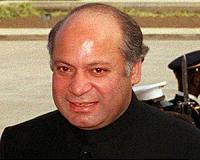
Pakistani Prime Minister Nawaz Sharif on Thursday held a groundbreaking ceremony for two controversial Chinese nuclear plants near the coastal city of Karachi which are set to add 1,100 megawatts to the energy-starved country's electric grid.
The plants, which are located just 20 miles from the burgeoning metropolis of around 20 million people, have stoked fears among scientific experts and residents, and their construction was earlier stayed by a court order.
"Two new nuclear power plants, K2 and K3 will be built near Kanupp (Karachi Nuclear Power Plant) which was built 43 years ago," Sharif said.
Temperatures can reach 50 degrees Celsius (120 Fahrenheit) in the country's centre in June and July, sending demand for electricity soaring and leaving a shortfall of around 4,000 megawatts.
"It is our top priority to end loadshedding," Sharif added, referring to scheduled power-cuts imposed throughout the country.
Pakistan is one of the few developing countries pursuing atomic energy in the wake of the Fukushima nuclear disaster in Japan in 2011.
The plants, which cost around $5 billion each and are due to be completed in 2020, are particularly controversial because their designs have never been tested in real life.
Karachi, which lies close to the confluence of three major tectonic plates, is also rated by experts as being particularly vulnerable to tsunamis.
Nuclear physicist Pervez Hoodbhoy told AFP: "K-2's ground breaking comes just days after the enormous blasts in Tianjin that have exposed the lax standards in China's environmental and industrial safety standards.
"Earlier, there had been a damning expose of corruption in the Chinese nuclear industry, which values speed over safety and which wants to export untested nuclear plants overseas.
"None of this is likely to deter Nawaz Sharif's government, which desperately seeks to show success in tackling Pakistan's energy crisis."
The government however insists the plant is subject to safeguards by the International Atomic Energy Agency (IAEA).
"Pakistan has a right to peaceful use of nuclear energy and…there is no reason to be concerned about the peaceful nature of the activity that is being performed today," a spokesman for the Foreign Office told reporters.
Pakistan's key ally China in April announced it would invest $46 billion in infrastructure, energy and transport projects as part of an ambitious project dubbed the China Pakistan Economic Corridor.
