
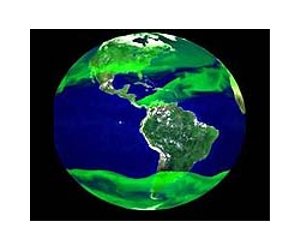
Two U.S. studies have reached different conclusions as to why methane, a potent greenhouse gas, unexpectedly leveled off at the end of the 20th century.
The papers, both by researchers at the University of California, Irvine, and published together in the journal Nature, agree that after decades of increases due to worldwide industry and agriculture the tapering off of the hazardous atmospheric hydrocarbon beginning in the 1980s was remarkable.
"It was an amazing mystery as to why this occurred," said researcher Eric Saltzman, a co-author of one paper suggesting reduced use of petroleum and increased capture and commercial use of natural gas were the driving factors.
Replacement of oil with lower-priced natural gas could be key to the decrease, the paper said.
However, a second paper proposed the decrease was down due to heavier commercial fertilizer use in the booming Asian farming sector that resulted in less fertile ground for soil microbes that create methane.
The key is new farm practices, lead author Fuu Ming Kai said, mainly the use of inorganic fertilizers instead of traditional manure.
Nature, in publishing both studies, asked Martin Heimann, director of Germany's Max Planck Institute for Biogeochemistry, to comment on the papers.
"It is indeed very remarkably rare that two differing studies about the same subject come out from the same department — I can't think of a similar case. But I think both analyses are scientifically sound and in themselves consistent," Heimann said. "At this time I would not favor one over the other."
