
The Philippines also has the right to defend every inch of its territory, President Benigno Aquino's spokesman said on Sunday, after China made a similar warning.
Spokesman Herminio Coloma's remarks came after China's foreign minister Wang Yi said on Saturday said his country would vigorously defend its sovereignty against "unreasonable demands from smaller countries".
Although he was referring to Japan, which has its own territorial dispute with China, his remarks could also cover China's other territorial dispute with the Philippines and other countries over parts of the South China Sea.
"It is the right of every country to defend its national territory. That is also the principle we are following," Coloma told reporters, commenting on the Chinese minister's remarks.
Coloma added that the Philippines was basing its position on the principles of international law like the United Nations Convention on the Law of the Sea or UNCLOS.
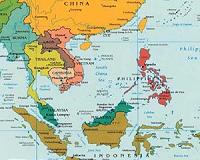
The Philippines and China, along with Brunei, Malaysia, Taiwan and Vietnam are all claimants to parts of the South China Sea, a major sea lane and rich fishing ground which is believed to sit on vast mineral deposits.
The Philippines has also expressed growing concern at the increased aggressiveness of the Chinese in pressing their claim to almost all of the waters, even up to the coasts of its neighbours.
The Philippine government has sought UN arbitration under UNCLOS to settle the dispute but China has rejected the move.
Last month the Philippines lodged a protest after the Chinese coastguard allegedly attacked Filipino fishermen off a disputed South China Sea shoal with water cannon on January 27. Beijing rejected the protest.
Philippines 'won't rush defence accord' for Obama visit
Manila (AFP) March 08, 2014 –
The Philippines said Saturday it would not rush to complete a defence accord with the United States just so it can be sealed by the time President Barack Obama visits next month.
President Benigno Aquino's spokesman Herminio Coloma said there was no timetable to complete the agreement which would allow more US troops and equipment access to the Philippines.
The agreement, which the two close allies have been discussing for several years, is seen as part of a Philippine effort to counter China's aggressive moves to back its claims to most of the South China Sea.
Asked by reporters if the accord would be completed before Obama's visit, Coloma said, "the government's priority is not with a timetable or with rushing something".
"In our view, it is not deadlines but the quality and content of the agreement that is more worthy of attention," he added.
Coloma also hailed the just-concluded Philippine-US bilateral strategic dialogue in Washington where both sides expressed concern for "recent developments" in the South China Sea as well as the need to respect international law and freedom of navigation in those waters.
"The outcome of the dialogue affirms the principles underpinning the strategic partnership between the two countries," he said.
Many observers believed the agreement would be completed ahead of Obama's visit to the Philippines as part of an Asian tour in April.
The Philippines has been hoping for increased US assistance for its poorly-equipped military amid growing territorial tensions with China.
China claims virtually all of the South China Sea, a major shipping lane that is also a rich fishing ground and is believed to sit on vast mineral resources.
The Philippines along with Brunei, Malaysia, Taiwan and Vietnam all have competing claims to parts of the South China Sea.
