
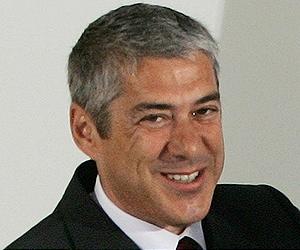
EU leaders met for a crucial summit in Brussels Thursday, as tensions over Libya were overshadowed by a political crisis in Portugal that could mean fresh trouble for the euro.
Originally meant to end the bloc's debt crisis by turning a temporary stability fund into a permanent mechanism, the summit was expected to discuss the military campaign in Libya but now has to deal with the instability in Portugal, one of its poorest members.
Portuguese Prime Minister Jose Socrates resigned Wednesday after parliamentarians rejected his austerity package, aimed at reducing the country's budget deficit to avoid a bailout similar to one that saved Greece and Ireland last year. While opposition leaders had backed the minority government's previous cost-cutting plans, they rebelled on the most recent as Socrates didn't consult them beforehand.
Portugal now faces a sustained period of political instability and early elections, and could become the third eurozone member to require a bailout.
Belgian Finance Minister Didier Reynders said giving Portugal money makes sense because it might help stabilize the situation in the country.
"I have always thought that it would be useful to organize aid, simply because that allows (Portugal) to pay less interest on its debt while undergoing restructuring and therefore make fewer demands, sometimes onerous ones, on (its) people," he was quoted as saying by the BBC Thursday in Brussels.
"If Portugal asks, we will be ready to intervene. For that to happen, there will need to be a plan to bring its finances back to better health and a request to unlock European funds."
Despite the Portuguese turmoil, leaders are expected to agree on the permanent crisis fund, which would be linked to stringent austerity measures if needed by a member state. The fund is aimed mainly at calming markets, which have reacted nervously to the changes in Portugal.
Some analysts warned that Spain, which has suffered a housing market crash and high unemployment, also may need outside help.
Meanwhile, at a Thursday evening dinner, French President Nicolas Sarkozy and British Prime Minister David Cameron were expected to brief other EU leaders on the military mission in Libya.
France has been at odds over who should lead the mission with Britain and Italy, which want NATO to be in charge. France, probably the most active European nation on Libya, prefers a British-French command.
As leaders were gathering in Brussels, thousands of protesters marched through Brussels, most of them peacefully, to protest austerity programs. Some marchers, however, clashed with riot police, who fired tear gas and water cannons.
Share This Article With Planet Earth
