
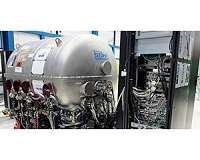
A new instrument called GRAVITY has been shipped to Chile and successfully assembled and tested at the Paranal Observatory. GRAVITY is a second generation instrument for the VLT Interferometer (VLTI). It will allow the measurement of the positions of astronomical objects on the finest scales and perform interferometric imaging and spectroscopy.
GRAVITY will bring the most advanced vision to the VLT, combining four individual telescopes of the Paranal Observatory so that they effectively act as a single telescope with a diameter of more than 100 metres.
Using several novel techniques, GRAVITY will offer sensitivity and accuracy far beyond what is possible today [1]. It aims to measure the positions of objects on scales of order ten microarcseconds, and perform imaging with four milliarcsecond resolution. For illustration, this corresponds to seeing buildings on the Moon, and locating them to within a few centimetres.
GRAVITY will push high angular resolution astronomy to new limits: it will probe physics close to the event horizon of the supermassive black hole at the Galactic Centre – a region which is dominated by effects predicted by Einstein's theory of general relativity. In addition, it will uncover the details of mass accretion and jets – processes that occur both in young stellar objects and in the active nuclei of other galaxies. It will also excel at probing the motions of binary stars, exoplanets and young stellar discs, and in imaging the surfaces of stars.
On 21 July 2015 the team saw "first laboratory fringes" from GRAVITY in the Paranal integration hall using a test light source. Following further tests of the GRAVITY instrument and the preparation of the VLT interferometer, GRAVITY will be moved to the VLTI later this year to see "first star fringes" using the four 1.8-metre Auxiliary Telescopes starting in November 2015. The commissioning of GRAVITY with the four 8-metre VLT Unit Telescopes is foreseen for the first half of 2016.
GRAVITY's development was led by the Max Planck Institute for Extraterrestrial Physics, in Garching, Germany and involves six institutes across Europe [2], as well as ESO.
[1] GRAVITY features fibre-fed integrated optics beam combiners, infrared wavefront sensors for adaptive optics, fringe tracking, active beam stabilisation, and a novel metrology concept. [2] The partner institutes in the GRAVITY Consortium are:+ Max Planck Institute for Extraterrestrial Physics, Garching, Germany
+ LESIA, Observatoire de Paris, Universite Paris Diderot, Meudon, France
+ Max Planck Institute for Astronomy, Heidelberg, Germany
+ University of Cologne, Cologne, Germany
+ Institut de Planetologie et d'Astrophysique de Grenoble (IPAG), Grenoble, France
+ Laboratorio de Sistemas, Instrumentacao e Modelacao em Ciencias e Tecnologias do Ambiente e do Espaco (SIM), Lisbon and Porto, Portugal
+ ESO, Garching, Germany
