
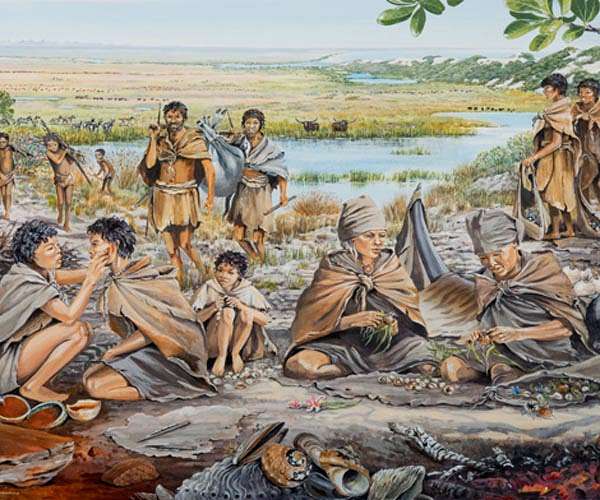
Archaeological breakthroughs at the Schoningen site, located within a former open-cast coal mine, have brought to light the essential role of wood in the technological advancements of early humans around 300,000 years ago. Initially unearthed in 1994, the site first gained international attention for the preservation of the oldest hunting weapons ever found. Recent comprehensive examinations by a team from the Universities of Gottingen, Reading, and the Lower Saxony State Office for Cultural Heritage have provided new insights into the varied and sophisticated uses of wood during this era. These findings include evidence of advanced woodworking techniques like "splitting," used to create sharp tools for processing hunted animals, significantly expanding our understanding of early human ingenuity with natural materials.
The detailed analysis of these wooden artifacts, facilitated by modern imaging technologies such as 3D microscopy and micro-CT scanning, revealed a diversity of tools and weapons crafted from spruce and pine woods. The preservation state of these items offers unprecedented insight into the woodworking skills of our ancestors, suggesting that wood played a far more crucial role in early human life than previously acknowledged. The site's inclusion in the nomination list for UNESCO World Heritage status underscores its global significance in showcasing early human cultural heritage.
The research, highlighting over 20 spears and throwing sticks, not only doubles the previously known arsenal of wooden weapons from the site but also showcases the resourcefulness of early humans in tool maintenance and recycling. The Schoningen finds underscore the importance of wood as a critical material in human evolution, a rarity in Paleolithic archaeological records due to its organic nature and the conditions required for its preservation.
Funded by the German Research Foundation and the Ministry of Science and Culture of Lower Saxony, this study marks a pivotal moment in understanding the complexity of early human life and their relationship with the natural world around them.
Research Report:The wooden artifacts from Schoningen's Spear Horizon and their place in human evolution
