
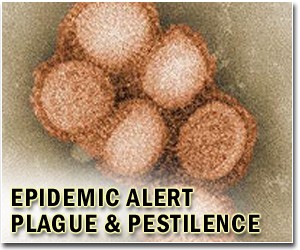
A new approach to coaxing the body to fight HIV without antiretroviral drugs has shown some success in almost half the patients enrolled in a small study, US researchers said Wednesday.
Twenty HIV-positive volunteers in Pennsylvania were asked to stop taking their drug therapy and submit instead to weekly doses of interferon-alpha, an antiviral chemical produced by the human immune system.
The treatment kept HIV under control in nine of the 20 patients at the 12-week mark, and appeared to decrease the amount of HIV present in cells that harbor the infection, known as reservoirs.
The trial was meant to last 24 weeks or until a person's HIV levels either rose or T-cells dropped to a certain level, at which point the subjects were to resume their antiretroviral treatment.
Just eight people stayed in the study for its full 24-week duration.
However, researcher Luis Montaner, a professor at the Wistar Institute and director of its HIV-1 Immunopathogenesis Laboratory, was optimistic that the findings had broken new ground.
"Our data shows that our human immune response can be made to control HIV in persons who have otherwise lost that ability and, if sustained by natural interferon production, it establishes proof-of-concept that a functional cure is theoretically possible," Montaner said in a statement.
"And while we still have much to pursue with this early clinical finding, I firmly believe this gives us hope that one day we can control — and eventually eradicate — HIV in absence of antiretroviral therapy."
The research, which has not been published or independently peer-reviewed, was presented at the 2012 Conference on Retroviruses and Opportunistic Infections in Seattle, Washington.
Relief agencies help victims of Madagascar storm
Antananarivo (AFP) March 6, 2012 –
Relief agencies and government officials started distributing emergency supplies Tuesday to Madagascan communities impacted by Tropical Storm Irina, which killed at least 65 people.
Prime Minister Jean Omer Berizky's office said the government had delivered 15 tonnes of white rice and several tonnes of beans to affected districts.
The United Nations World Food Programme and UNICEF said they had sufficient food to help people for several days.
Irina was the second killer storm of the season. Last month, tropical cyclone Giovanna left 35 people dead and many more injured.
Madagascar's storm season normally runs from November through February and costs dozens of lives every year.
