
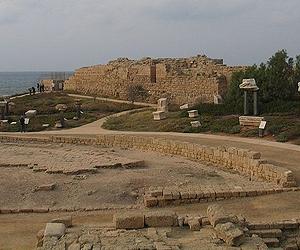
A massive storm that battered the eastern Mediterranean destroyed the breakers protecting the Roman-era port of Caesarea, threatening to wash away the historic site, officials said Monday.
"In this big storm, the wave breakers that protect the Caesarea shore totally collapsed," said Zeev Margalit, the head of development and preservation at the Israel Nature and Parks Authority.
"Now the port is exposed to the full force of the waves," Margalit told AFP. "It is a matter of time until it all collapses."
Margalit said the agency had warned the government several times in recent months of the danger to the port, which was built by Herod and served as the seat of government for Pontius Pilate.
At the scene, hundreds of large stones lay scattered across the jetty which appeared to have sustained heavy damage from the storm, an AFP correspondent said.
High winds of up to 100 kph (65 mph) whipped up enormous waves, some as high as 12 metres (40 feet), which continuously battered the ancient port making any intervention to protect the site impossible, he said.
Further out, a team of workers tried to clear up the rubbish littering the port which had been dumped there by the sea.
The ruins of the port city, one of the largest in the region in Roman times, is a major tourist attraction in Israel and the Roman amphitheatre continues to host concerts.
It also contains the remains of dozens of buildings from the subsequent Byzantine and Crusader periods, including the moat and fortified walls that surround the site.
In recent times Caesarea has become an upscale residential town, home to some of Israel's wealthiest and most influential citizens. Prime Minister Benjamin Netanyahu has a weekend home in the town, some 50 kilometres (32 miles) north of Tel Aviv.
Margalit said it would cost about 60 million shekels (16 million dollars) and take three years to construct a new, modern wave breaker to protect the site.
However, he said the authority had also proposed a six million shekel (1.6 million dollar) emergency plan that would involve construction of a temporary wave break.
"If Israel does not react immediately then a major international heritage site will be lost," Margalit said.
Share This Article With Planet Earth
