
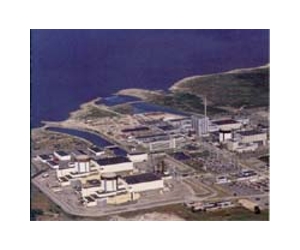
In a significant policy change, Swedish parliamentarians this week reversed a 30-year-old ban on building new nuclear reactors.
The Riksdag voted 174-172 in favor of a bill proposed by the government that would see Sweden replacing its existing 10 reactors with new ones within the next few decades.
The reactors, which supply half of the country's electricity, under a plan from 1980 were due for shutdown in 2010, but that plan was scrapped last year.
Under the new plan, reactors can be built at the same site as the existing plants, but their number can't exceed 10 and no new sites will be approved.
Environmental group Greenpeace nevertheless called the move "irresponsible."
"The members of Parliament show they do not take the environmental risks posed by nuclear power seriously, and that they do not trust in the enormous potential there is for Swedish renewable energy," Greenpeace spokesman Ludvig Tillman said in a statement.
The center-right government is in favor of nuclear power to help reduce the country's carbon dioxide footprint (which already is quite small). The country's energy intensive industry has also lobbied for nuclear power to remain in the mix.
This adds to the renewed momentum for nuclear across Europe, where governments are increasingly banking on nuclear power to meet the dual challenges of supply security and climate protection.
Eighty percent of France's electricity comes from nuclear plants, and Finland has decided to build two new reactors on top of one already under construction.
Belgium last October has to keep its nuclear power plants running for another decade, extending the nuclear phase-out that was scheduled to start in 2015.
Belgium satisfies more than half of its power demand with seven nuclear reactors, three of which were due to be shut down in 2015. Fearing a significant power gap, Brussels decided to keep those reactors up and running.
Germany is also mulling a revival of nuclear power. In 1999 Berlin decided to shut down all of Germany's 17 operating reactors by 2021. The government of Chancellor Angela Merkel could prolong the life of the reactors by up to ten year, the government recently said. A final decision will be made by the end of next month, when Germany is to publish a major energy strategy paper.
The British government in early 2008 urged companies willing to build reactors in the United Kingdom to come forward. French energy giant EDF has since announced it would be ready to build four nuclear plants in the United Kingdom, the first of which could go online in 2017.
However, the financial crisis has slowed down actual progress when it comes to plant financing. Finland's nuclear power plant, under construction, is years behind schedule and billions of dollars more expensive than envisaged.
Critics of nuclear power point to the dangers of accidents, nuclear proliferation and the unsolved issue of how to store the highly radioactive waste created in the process.
Share This Article With Planet Earth
