
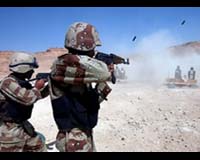
The now nearly forgotten Iran-Iraq war teaches important lessons about the nature of 21st century war. The first is that wars don't have to be won by "perfect" armies operating with state-of-the-art military weapons. Weapons systems and troops trained to higher standards than those of their enemies are what is really required to do the job. The U.S. armed forces, the most highly trained and best equipped in the world, swept aside the Iraqi army with minimum casualties in the 1991 and 2003 Gulf Wars.
These successes, incidentally, also taught the lesson that it isn't a waste of money for world-class militaries and superpowers to equip themselves as best as they can: That lesson was taught again last year by the Russian army in its highly successful invasion of the former Soviet republic of Georgia in the Caucasus.
However, the Iraqi army that performed so poorly against the U.S. armed forces in 1991 and 2003 was highly impressive in defense against almost eight years of Iranian counter-attacks in the 1980-88 war, the bloodiest and longest conflict in modern Middle East history.
On the defensive, Iraqi soldiers, both Sunni and Shiite, endured enormous privations and held out against overwhelming odds fighting a vastly more numerous though poorly equipped and very miserably trained and directed Iranian mass wave attacks.
The achievements of the Iraqis in that war were ignored at the time and over the two decades since by U.S. policymakers. When U.S. Defense Secretary Donald Rumsfeld and his colleagues were planning the 2003 invasion of Iraq to topple its longtime President Saddam Hussein, there was a clear assumption among them and their supporters in the media that in military terms the Iraqis were a joke.
The bravery and stamina of those Iraqi soldiers fighting for years in World War I trench conditions to defend the main Iraqi port of Basra from waves of Iranian attacks were ignored by those supposed experts. Had they paid more attention, they might not have been so surprised by the ferocity, effectiveness and tactical resilience that Sunni Muslim insurgents repeatedly showed in central Iraq from mid-2003 to the end of 2006.
The unexpectedly formidable nature of the Sunni Iraqi insurgency forced U.S. military leaders to belatedly study counterinsurgency warfare, but they and the handful of U.S. public military intellectuals who took counterinsurgency with the seriousness it deserved in their turn swung to the opposite extreme.
There is now a growing declaration in the U.S. media, eagerly adopted by policymakers in the new Obama administration, that investing big in counterinsurgency can be accompanied by drastic reductions in the combat capabilities of the U.S. armed forces.
The growing U.S. economic crisis and the dangerous insolvency of the federal government after the wild spending sprees of the Bush years indeed make major cutbacks in expensive military appropriations programs inevitable. But when these are made, the warning words of analyst Peter Brookes at the Heritage Foundation need to be remembered too — that the United States in the 21st century will continue to need a well-balanced military that is capable of fighting and winning conventional wars and battles as well as counterinsurgency ones.
(Part 3: More lessons from the Iraqi army)
