
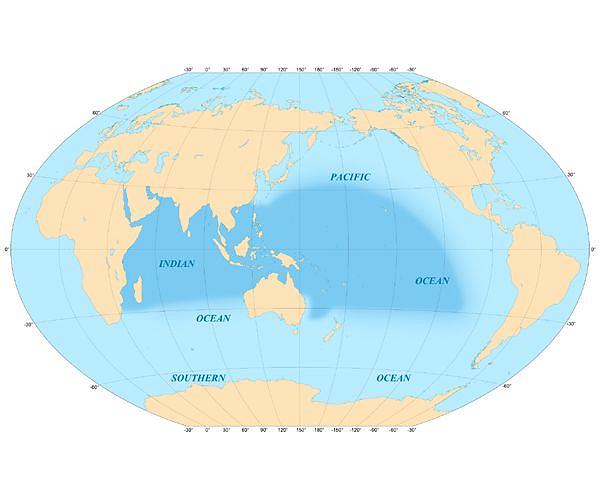
US President Donald Trump on Sunday spoke to Japan's new prime minister, Yoshihide Suga, to congratulate him on taking office and to discuss a "free and open Indo-Pacific" region, which is increasingly dominated by China.
Beijing's expanding military presence in the region has worried several of its neighbors, and Washington has vowed to stand up against its territorial claims.
China is locked in disputes with neighbors including Japan and Vietnam over islands in the resource rich South China Sea.
"The two leaders discussed the importance of pursuing our shared vision of a free and open Indo-Pacific, continuing to strengthen the United States-Japan Alliance, and working together to strengthen the global economy," the White House said in a statement.
After the phone conversation Suga told reporters that he informed Trump that the alliance with Washington is the "cornerstone of peace and stability in the region," Japan's Kyodo News reported.
In their 25-minute call, Trump and Suga also talked about the situation in North Korea. The Japanese leader asked for US support to push for the return of Japanese nationals kidnapped by the North Koreans in the 1970s and 1980s, Kyodo reported.
The two leaders also discussed the response to the coronavirus pandemic, and agreed to cooperate on developing and distributing a vaccine and treatment for the deadly virus, an unnamed Japanese official told Kyodo.
Suga earlier spoke by phone with Australian Prime Minister Scott Morrison, which Kyodo said is the first head of government he spoke to since his inauguration.
– Between the US and China –
Japan's parliament elected Suga, 71, as the country's first new leader in nearly eight years on Wednesday.
He said he would seek continued strong ties with Washington and stable relations with China and Russia.
Japan is caught in the tensions between the United States and China, its two biggest trading partners.
Suga will face a growing trend towards protectionism — something Japan has bucked with the enthusiastic embrace of international trade pacts.
The newly elected prime minister has pledged to continue the work of former leader Shinzo Abe, whose signature "Abenomics" program involved vast government spending and monetary easing, and attempts to cut red tape.
Abe made building a close personal relationship with Trump a cornerstone of protecting the alliance with Washington.
In 2016, he flew to New York to chat with the then president-elect, becoming the first foreign leader to meet Trump at his Manhattan skyscraper. The pair regularly golfed together.
Japanese lawmakers call for protection of contested islands
Washington DC (UPI) Sep 18, 2020 –
Japanese lawmakers called for joint military drills with the United States to protect the South China Sea's Senkaku Islands, a target of Chinese incursion.
About 100 members of the governing Liberal Democratic Party drafted a proposal on Thursday seeking United States involvement in asserting Japan's claim over the islands, about 250 miles west of Okinawa.
While Japan controls the islands, citing history and international law, China and Taiwan both claim them. China has recently increased aerial and naval activities near the islands, with regular visits from Chinese ships this year.
Although Japan does not have a permanent military base on the Senkaku chain of islands, the United States and Japan have conducted numerous joint drills at other locations.
The chain is a barren group of seven rocky islands totaling seven square miles, but it is surrounded by rich fishing waters. The area may also hold oil and natural gas deposits.
The proposal, summarized on Thursday in a blog post by the LDP's Masahisa Sato, calls for a higher military budget to equip Japan Coast Guard patrol ships with "anti-aircraft radar" to facilitate detection of low-altitude aircraft and drones.
It also suggested the involvement of the Japan Air Self-Defense Force against potential airspace violations, and "enlightenment of the Senkaku Islands issue" to make clear Japan's sovereignty.
In response, Chinese Foreign Ministry spokesman Wang Wenbin referred to the Senkaku Islands as Chinese territory, and suggested that Japan work to improve China-Japan relations.
