
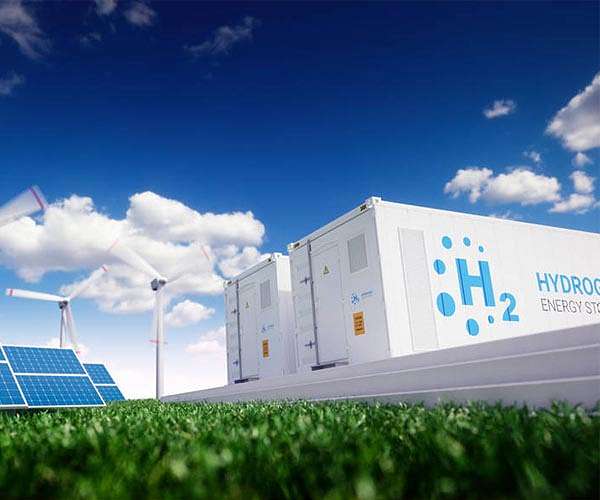
The Department of Chemistry at Ulsan National Institute of Science and Technology (UNIST), led by Professor Hyunchul Oh, has made a significant breakthrough in hydrogen storage technology. This innovation introduces a nanoporous magnesium borohydride (Mg(BH4)2) framework that achieves high-density hydrogen storage under ambient conditions, setting a new standard for energy storage technologies.
The team's groundbreaking work has overcome the longstanding challenge of low hydrogen storage capacity, employing a novel synthesis of magnesium hydride, boron hydride (BH4)2, and magnesium cation (Mg+) to create a material capable of holding five hydrogen molecules in a unique three-dimensional structure. This material boasts a hydrogen storage capacity of 144 g/L per volume of pores, dramatically outperforming traditional hydrogen storage methods and even surpassing the density of solid-state hydrogen.
Professor Oh highlighted the transformative potential of their findings, stating, "Our innovative material represents a paradigm shift in the realm of hydrogen storage, offering a compelling alternative to traditional approaches." This advancement is poised to revolutionize hydrogen energy utilization by improving efficiency, reducing costs, and addressing the challenges of large-scale hydrogen storage, especially in public transportation.
Research Report:Small-pore hydridic frameworks store densely packed hydrogen
JooHyeon Heo, Ulsan National Institute of Science and Technology (UNIST), [email protected]
