
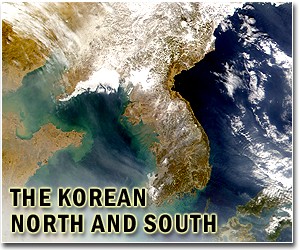
The UN Security Council failed Sunday to agree a statement on the Korean military crisis and Russia warned that the international community was now left without "a game plan" to counter escalating tensions.
China fended off Western demands that North Korea be publicly condemned for its November 23 artillery assault on Yeonpyeong island which killed four South Koreans, diplomats said.
It even rejected a proposed statement which did not mention North Korea or the Yeonpyeong name in a paragraph on the November 23 attack, diplomats said.
Russia's UN envoy Vitaly Churkin emerged from the Security Council to explain how eight hours of formal negotiations, and private talks which included the ambassadors from North and South Korea, had failed.
Unofficial contacts were to continue but US ambassador Susan Rice, the Security Council president for December, told reporters it was "safe to predict that the gaps that remain are unlikely to bridged."
Russia demanded the meeting hoping for a Council statement to send a "restraining signal" to the two Koreas and to call on UN Secretary General Ban Ki-moon to send a special envoy to negotiate with the rival states, Churkin said.
He expressed hope that a UN envoy could still go, warning that the international community now has no weapon against the spiraling tensions.
"Now we have a situation with very serious political tension and no game plan on the diplomatic side," Churkin said.
Six nation talks on North Korea's nuclear weapons have come to a halt "and there is no other diplomatic activity, so we believe that there must be an initiative."
The ambassador reaffirmed a call by the Russian and Chinese foreign ministers for South Korea to call off a live-firing drill near Yeonpyeong. North Korea has said it will retaliate against the exercise.
But the United States again strongly condemned the communist North's "unprovoked aggression" and defended South Korea's right to stage drills.
"The majority of council members made clear their view that it was important to clearly condemn the events of November 23 and the attack by DPRK (North Korea) on Yeonpyong island," Rice said.
Britain proposed a statement which said the council "condemns the attack launched by the DPRK on the ROK (South Korea) on November 23."
In an effort to overcome China's objections, Russia produced a new draft which said simply: "The members of the Security Council condemned the shelling of 23 November 2010 resulting in the loss of human life, including civilians, and strongly deplored the aggravation of tension in the Korean peninsula it led to."
That was blocked by China, diplomats told AFP.
Rice said most council members opposed a statement "that was ambiguous in some fashion about what had transpired in the run up to today and simply to pretend that time began today.
"That's not the case. There is a history, there have been two very serious attacks by DPRK on the Republic of Korea over the last nine months.
"The vast majority of the Council thinks that that needs to be clearly stated and condemned."
She said the Seoul government had shown "enormous restraint" ever since the warship Cheonam was sunk in March with the loss of 46 crew.
"The planned exercises are fully consistent with South Korea's legal right to self defense," Rice declared.
"It has been done and notified transparently, responsibly, and will not occur in a fashion that we believe gives North Korea any excuse to respond in the fashion that it has threatened to do."
North Korea has warned of a "disaster" if the firing drill is held on the contested sea border.
earlier related report
UN powers wrangle over blaming N. Korea for attack
United Nations (AFP) Dec 19, 2010 – The UN Security Council held emergency talks Sunday on escalating Korean tensions but the major powers wrangled over whether to condemn North Korea for the crisis.
Russia had called for the council to send a "restraining signal" to the two Koreas — with the South vowing to stage a new live-fire military drill and the North threatening retaliation.
After more than six hours of talks however, the five permanent powers — Britain, China, France, Russia and the United States — remained split on whether the communist North should be publicly blamed for causing the heightened tensions with its November 23 artillery attack on Yeonpyeong island.
China and Russia, North Korea's near neighbors and main allies, rejected western demands that the North be named as the attacker, diplomats said.
China even refused to let the name Yeonpyeong be included in a proposed Council statement, one diplomat said.
Russia and China instead proposed a text which urged "maximum restraint" on the Korean peninsula and called on UN Secretary General Ban Ki-moon to send a special envoy to negotiate "urgent measures" with the two governments.
Britain, backed by France, the United States and Japan, had proposed a text which "deplored" North Korea's artillery attack.
This was rejected by China and Russia which then proposed an implicit condemnation of the Pyongyang regime by referring to a statement by the UN secretary general which called the Yeonpyong attack "one of the gravest incidents since the end of the Korean War."
The 15 Security Council members heard a briefing on the latest Korean crisis from B. Lynn Pascoe, UN undersecretary general for political affairs, and also had private talks with the UN ambassadors from North and South Korea.
Russia's original draft statement called for "maximum restraint" by North and South Korea, diplomats said.
The Russian document sought "a resumption of dialogue and resolution of all problems dividing them exclusively through peaceful diplomatic means," diplomats said.
South Korea, backed by the United States, has vowed to stage live firing drill exercises near Yeonpyeong as soon as bad weather eases.
North Korea has warned of "disaster" if the exercise goes ahead and South Korea has reportedly said it has seen signs that the North Korean military is on higher alert.
The Russian statement would call on Ban immediately send a special representative to North and South Korea "to consult on urgent measures to settle peacefully the current crisis situation in the Korean peninsula."
Russia called for the emergency meeting on Saturday and expressed some anger that it was only held the next day.
"We believe that the Security Council must send a restraining signal" to South and North Korea, the Russian ambassador Vitaly Churkin said.
The council must "help launch diplomatic activities with a view to resolving all issues of dispute between the two Korean sides by political and diplomatic means," he said late Saturday.
earlier related report
Security Council holds Korea crisis talks
United Nations (AFP) Dec 18, 2010 – The UN Security Council held emergency talks Sunday on escalating tensions between the two Koreas as the South vowed to go ahead with a live-fire military exercise on a frontier island.
The North's military was reported to have heightened its alert status along its coast nearest the planned drill.
US envoy Bill Richardson meanwhile put his own proposals to North Korea's military leadership in Pyongyang in a bid to ease the increasing hostility.
"It's a very, very tense situation, a crisis situation," Richardson told CNN from Pyongyang.
South Korea has said it will go ahead with a live-fire exercise near Yeonpyeong island on the disputed sea frontier once bad weather lifts. North Korea, which shelled the island last month killing four people, has warned of "disaster" if it proceeds.
The North has boosted the combat readiness of its forces on the Yellow Sea coast nearest to the planned drill, according to a Seoul government source quoted by the South's Yonhap news agency.
An artillery unit has "raised its preparedness level" and some fighter jets have been moved out of an air force hangar, the anonymous source was quoted as saying.
Russia, which demanded the special Security Council meeting, wants UN Secretary General Ban Ki-moon to send a special envoy to both states to seek "urgent measures" to halt the crisis, diplomats said.
It made the call in a draft statement, sent to the council's other 14 members, which called for "maximum restraint" by North and South Korea, diplomats said.
The Security Council negotiations looked set to become protracted as the Security Council has never managed even to agree a statement on the North's November 23 shelling of Yeonpyeong which set tensions spiralling.
China has blocked any move to condemn North Korea since then.
Most Security Council nations involved in Sunday's talks wanted a statement which criticised the North for the shelling and the sinking of a South Korean warship in March, but Russia and China only wanted a call for restraint and for the envoy to be sent, a diplomat said.
The foreign ministers of China and Russia urged South Korea to cancel its military exercise, during telephone talks on Saturday.
"China firmly opposes any actions to cause tension and worsen the situation," Chinese Foreign Minister Yang Jiechi said.
"We are seriously concerned about possible further escalation of tension on the Korean peninsula," Russia's UN envoy Vitaly Churkin said Saturday.
"We believe that the Security Council must send a restraining signal to" South and North Korea, he added.
In Pyongyang, Richardson, governor of New Mexico and a veteran negotiator with the communist North, proposed that the two Koreas set up a military hotline to address border incidents, CNN reported.
He also lobbied for a military commission with members from North and South Korea plus the United States to monitor disputed areas in the Yellow Sea, which includes Yeonpyeong.
Richardson spoke after meeting Major General Pak Rim Su, who leads North Korean forces on the tense border with the South. He described their talks as "very tough" but making "some progress".
Richardson said Pyongyang was "very, very provoked" by the South's planned drill, although the North Korean general was open to his idea for a military commission.
Pyongyang has threatened "disaster" if the South stages the drill on Yeonpyeong, and a foreign ministry statement Saturday accused US troops — some 20 of whom who will take part in the drill — of providing a "human shield".
South Korea has rejected calls for the drill to be abandoned, and said the one-day exercise may take place on Monday or Tuesday.
The North's Yeonpyeong attack, the first shelling of civilian areas since the 1950-53 Korean War, sparked outrage in the South, which rushed more troops and guns to frontline islands.
Military tensions have taken off in parallel to new international fears over the North's nuclear arms. It has revealed a uranium enrichment programme which the United States and its allies have said breach Security Council resolutions.
Share This Article With Planet Earth
