
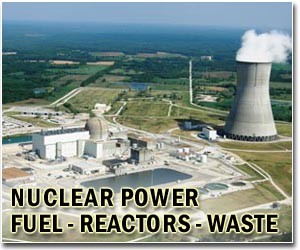
The United States and Vietnam signed a memorandum of understanding this week for cooperation in the nuclear power sector.
The agreement will "open the door for increased cooperation" in areas such as the development of human resources and safety and security infrastructure, access to reliable sources of nuclear fuel as well as the management of radioactive waste and used fuel, the U.S. State Department said in a statement.
Vietnam is "willing to cooperate with international partners in the field on the basis of respect to national independence, sovereignty and mutual benefits," Le Dinh Tien, Vietnam's deputy minister of science and technology, said at the signing ceremony Tuesday in Hanoi.
U.S. Ambassador to Vietnam Michael Michalak, also at the signing ceremony, said both countries will continue efforts to develop the regulatory and physical infrastructure needed for "a safe and secure" civilian nuclear power sector in Vietnam.
Michalak said the agreement would facilitate cooperation between the United States and Vietnam in areas such as requirements for power reactor and fuel service arrangements, including the establishment of a reliable source of nuclear fuel for future Vietnamese civilian nuclear reactors, allowing Vietnam to rely upon international markets for nuclear fuel services.
Hanoi has signed bilateral nuclear cooperation agreements with Russia, China, France, India, South Korea and Argentina.
Minister of Science and Technology Hoang Van Phong told the Vietnam News Agency last month that nuclear power plants would contribute "considerably" to the country's annual electricity output. He said nuclear power would help to "ensure the sustainable development of the national economy during the process of industrialization and modernization."
In 2007, the Vietnamese government approved a nuclear power development plan, aiming for a 2,000-megawatt nuclear power plant to be online by 2020.
The U.S. Energy Information Administration says half of Vietnam's domestic energy consumption comes from oil. Hydropower supplies about 20 percent of Vietnam's power, coal supplies about 18 percent and natural gas accounts for the remainder.
Vietnamese Prime Minister Nguyen Tan Dung will be leading an official delegation to the April nuclear security summit in Washington, the state department said.
"Vietnam has also demonstrated its commitment to greater nuclear security," the state department statement said, noting that the U.S. government looks forward to a joint effort on deployment of radiation detection equipment at Vietnam's major seaports.
In related news, Vietnam will consider using Japanese technology for nuclear energy, Japanese Prime Minister Yukio Hatoyama said Thursday in Tokyo, Bloomberg News reports. Hatoyama said he received a letter from Dung regarding nuclear power plant construction.
Share This Article With Planet Earth
