
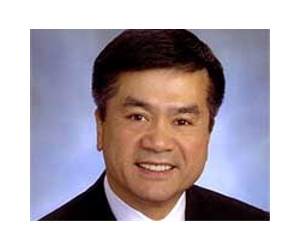
The new US ambassador to China passed up an opportunity to defend online freedom of speech at his first public address in the country on Friday when an outspoken Chinese professor raised the issue.
After a speech to 400 students at the Beijing Foreign Studies University, touching on familiar themes in US-China relations such as trade, jobs, and joint anti-terror efforts, Gary Locke opened the floor to questions.
Professor Qiao Mu, a journalism professor at the university, asked Locke if he had ever been to China's other "famous wall, the Great Firewall of China" — a term used for Beijing's vast Internet censorship system.
"How do you evaluate Internet policy in China and the US, and what will you do in your term to use the Internet to keep up with Hillary Clinton's ideas… in other words, to use the Internet to develop bilateral relations?" he asked.
US Secretary of State Clinton has previously called for global Internet freedom, saying nations that suppress online activity will pay an economic cost and risk Arab-style unrest.
Qiao later told AFP six of his microblog accounts have been shut down for speech deemed too sensitive.
In his address, Locke had raised the importance to Americans of the Universal Declaration of Human Rights, which calls for equal access for all to due process of the law, freedom of speech, association, worship and the press.
But in response to Qiao, Locke said: "What will hamper the use of the Internet is the lack of trust.
"If people don't have trust that their private information will be kept private on the Internet, people will be reluctant to use it to its full advantage."
After the event, asked if Locke had missed his chance to specifically address China's strict censorship of the Internet, Qiao excused the ambassador.
"You can't expect too much," he said. "But he answered me technically, rather than strategically. China needs some outside pressure to push us forward to develop a more civil society."
