
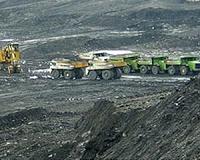
While the United States remained a net exporter of coal, last year's levels marked the third straight year for declines, federal data show.
"Slower growth in world coal demand, lower international coal prices, and higher coal output in other coal-exporting countries contributed to the decline in U.S. coal exports," a daily breifing from the U.S. Energy Information Administration read.
The United States last year exported 74 million tons of coal, a 23 percent decline from 2014 and the third straight year for a loss. A record 124 million tons of coal were exported from the country in 2012.
For export destinations, EIA reported India was one of the few countries taking on more U.S. coal, bringing its total share of U.S. coal up 4 percent to 9 percent in 2015. Coal exports to the rest of Asia fell.
For Europe, traditionally one of the leading markets for U.S. coal, exports were down 28 percent to 14.6 million tons last year.
Imports, meanwhile, remained relatively static last year at 11.3 million tons, though regional markets varied. The New England market saw the greatest decline with 41 percent as the region closed down many of its coal-fired electricity plants.
The U.S. Interior Department in January announced the start of a review of the federal coal program to identify potential reforms. While the review is ongoing, the Interior Department is pausing new coal leasing on public lands, with continued mining under existing leases. The review process is expected to take three years.
Natural gas is becoming the primary source of electricity in the nation. Prior to April 2015, the total monthly share of electricity generated by coal had always been greater than gas.
EIA estimates total U.S. coal production will decline 3 percent this year as the country pushes a low-carbon agenda.
JPMorgan to avoid financing coal projects
New York (AFP) March 7, 2016 –
Wall Street banking giant JPMorgan Chase said Monday that it would avoid financing new coal projects in advanced economies due to their contribution to global warming.
The bank's official Environmental and Social Policy Framework drew a line against supporting new or "greenfield" coal mines in high income countries, or new coal-fired power plants.
The Framework also said it will cut back credit support to coal mining companies over the medium term and only back new coal plants in lower-income countries that employ "ultra-supercritical steam generation technology."
"We believe the financial services sector has an important role to play as governments implement policies to combat climate change," the document said.
"We will therefore continue to provide financial support to those clients whose activities remain consistent with our own internal policies and government-led efforts to achieve an orderly transition toward less carbon-intensive economies."
The bank also set tough policies on lending that might involve forestry, exploitation of the Arctic, and said it would try to commit more financial support to protecting natural ecosystems.
