
The US military chief warned Thursday that Taliban militants in Afghanistan have grown more violent and better organised in recent years, and troops face "very difficult fighting" ahead.
The US military faced a crucial 18-month battle to help stabilise the country for the Afghan people and stem a three-year slide in security, said Admiral Michael Mullen, the chairman of the Joint Chiefs of Staff.
Mullen said it was unclear how long it would take to improve the security situation, but the latest phase of the operation in southern Helmand province was only "just beginning," in an interview with the BBC's Arabic TV service.
He also said ultimately it would be the Afghan people themselves who would help defeat the insurgency.
"People ask me 'how long?' and I don't know how long," Mullen said.
"I know it's (security) got progressively worse over the three, three and a half years since 2006," he said at Bagram Airbase outside Kabul.
"And the Taliban has got much better, they are much more violent, they are much more organised and so there's going to be fighting that is associated with it.
"And in the end, if we get it right for the Afghan people, the Afghan people will turn the Taliban out, and that's the answer in a counter insurgency."
Mullen said he was confident there were now sufficient resources in Helmand province to hold areas that troops take from the militants.
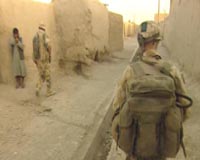
About 4,000 US Marines, thousands of British troops and Afghan security forces are battling their way into some of the most dangerous insurgent strongholds in Helmand.
Military casualties have surged in recent weeks as troops attempt to clean out areas of rebels to allow Afghans to vote in presidential and provincial council elections due on August 20.
"That particular operation started just a few days ago," Mullen said. "But we have enough forces there now to hold the territory so the Taliban can't come back, but we are just beginning and that's going to take some time."
He also said training more Afghan military and police was critical to ensure security.
"We have to provide the security and train the Afghan security forces to provide the security as rapidly as we can so that it can be sustained."
"Over the next 12 to 18 months we have to really start to turn the tide. We've had violence go up, security go down for the Afghan people, and the Afghan people are much more uncertain now about their future," he said.
There are about 90,000 international troops, mainly US, British and Canadian, deployed in Afghanistan to help Kabul defeat the Taliban insurgency which followed the 2001 US-led invasion to oust their Kabul regime.
Share This Article With Planet Earth
