
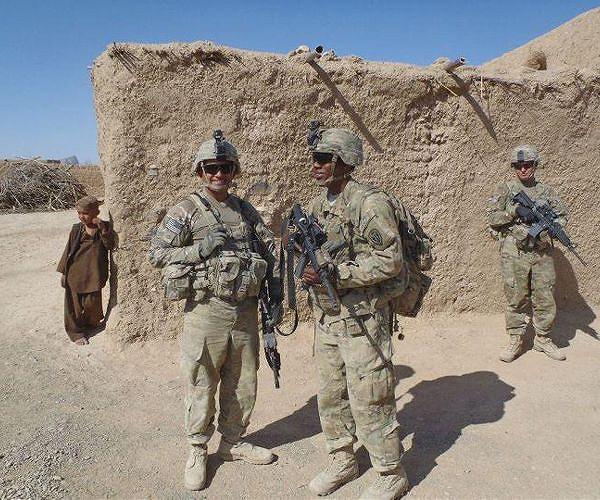
The US military is proceeding with President Donald Trump's order to slash troops in Afghanistan to 2,500 by mid-January, the Pentagon's top general said Wednesday, calling the situation on the ground a "strategic stalemate."
Joint Chiefs Chairman General Mark Milley, who earlier appeared opposed to cuts on the estimated 4,500 US troops currently there, said the United States had been successful "to a large measure" at its original goal of hitting Al-Qaeda after the September 11, 2001 attacks.
The US went to Afghanistan in 2001, he said, "to ensure that Afghanistan never again became a platform for terrorists to strike against the United States.
"To a large measure, we have been, at least to date, successful in preventing that from happening again," Milley said in an online Brookings Institution forum.
"We believe that now after 20 years, two decades of consistent effort there we've achieved a modicum of success."
Milley said it has been clear for the past five to seven years that the situation on the ground has been a strategic stalemate, with neither Afghan government forces or Taliban insurgents able to defeat the other.
The only way that war could come to an end — in a way that is aligned with US security needs — he said, was through a negotiated settlement between Kabul and the Taliban.
With negotiations on a peace deal underway in Doha, he said, the Trump administration has decided to cut US troop levels — which were at about 13,000 a year ago — to 2,500 by January 15.
At that level, he said, the US will hold "a couple" main bases and several smaller satellite bases in the country.
In early November, Trump fired defense secretary Mark Esper, who had resisted accelerating a troop withdrawal schedule, and replaced him with White House aide Chris Miller, who backs the drawdown plans.
"We're in the process of executing that decision right now," Milley said.
"What comes after that, that will be up to a new administration," he said, referring to President-elect Joe Biden, who will replace Trump in late January.
"We'll find that out on January 20 and beyond," Milley added.
Afghan talks to advance to next stage
Doha (AFP) Dec 2, 2020 –
Peace negotiations between the Taliban and the Afghan government in Qatar are ready to advance to the next stage, both sides said Wednesday after agreeing on rules for the talks.
The meetings, which began in September, had been bogged down by disputes on the agenda, the basic framework of discussions and religious interpretations.
Nader Nadery, a member of the government's negotiating team, tweeted that "procedures for the intra-Afghan negotiations… had been finalised and discussions on the agenda" would follow.
Mohammad Naeem, a spokesman for the Taliban, also tweeted that procedures for the talks had been "finalised and from now on, the negotiations will begin on the agenda".
The warring sides have been engaging directly for the first time following a landmark troop withdrawal deal signed in February by the insurgents and Washington.
The US agreed to withdraw all foreign forces in exchange for security guarantees and a Taliban pledge to hold talks with Kabul.
Abdullah Abdullah, chairman of Afghanistan's High Council for National Reconciliation, in a tweet called the development an "initial major step".
Washington's special envoy on the conflict Zalmay Khalilzad also welcomed the breakthrough, tweeting that it was a "significant milestone".
He said the two sides had agreed on a "three-page agreement codifying rules and procedures for their negotiations on a political roadmap and a comprehensive ceasefire".
"This agreement demonstrates that the negotiating parties can agree on tough issues," he added.
While both sides' negotiators had been ready to proceed with the talks, sources said President Ashraf Ghani had objected to wording in the proposed ground rules that referred to his administration and the Taliban on an equal basis as "parties to the war".
It is unclear whether the wording was altered.
Ghani's spokesman Sediq Sediqqi said on Twitter "it's a step forward towards beginning the negotiations on the main issues".
Outgoing US Secretary of State Mike Pompeo called for "expedited discussions" during a visit to Doha on November 21 during which he met with both Taliban and Afghan government negotiators.
"Rapid progress on a political roadmap and a ceasefire is what the people of Afghanistan want more than anything else," Pompeo said in a statement in response to Wednesday's announcement.
There has been a surge of violence in Afghanistan in recent weeks.
The insurgents have launched near daily attacks against Afghan forces, primarily in rural areas, since signing the deal with Washington in February that paved the way for the withdrawal of foreign troops by May 2021.
