
Two US senators responsible for introducing strict sanctions on Iran renewed their warning Wednesday over nuclear negotiations with the country, saying any final pact must "dismantle" the Islamic republic's nuclear program.
"We believe that a good deal will dismantle, not just stall, Iran's illicit nuclear program and prevent Iran from ever becoming a threshold nuclear weapons state," Senate Foreign Relations Committee chairman Robert Menendez and Republican Senator Mark Kirk said in a statement.
Should a potential deal fail to achieve such goals, including a robust inspection and verification regime and strict limits on nuclear-related research, "we will work with our colleagues in Congress to act decisively, as we have in the past."
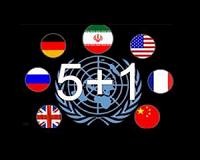
Their remarks follow three days of nuclear talks in Oman between Iran and the P5+1 — UN Security Council permanent members Britain, China, France, Russia and the United States, plus Germany — with a November 24 deadline looming to strike a comprehensive agreement.
Menendez and Kirk have worked since 2011 to draft and pass multifaceted economic sanctions against Tehran, and their statement was aimed at pressing international negotiators for a strong deal that would keep Iran's feet to the fire on its nuclear program.
"Gradual sanctions relaxation would only occur if Iran strictly complied with all parts of the agreement," the lawmakers said.
Their most recent bill, which would impose new measures should the negotiations fail, has been blocked since the end of 2013 by President Barack Obama's Democratic allies in the Senate.
His administration had wanted the negotiations to proceed without interference from Congress.
But Republicans, who snatched the Senate majority from Democrats in last week's midterm elections and take control when the next congressional session convenes on January 3, may not show the same deference.
Faced with the prospect of unilateral action by the US Congress, Iranian President Hassan Rouhani said Wednesday that "each country must resolve its own problems," although he did not name the United States.
Final nuclear talks between the P5+1 and Iran are set for November 18 in Vienna.
Domestic politics shouldn't influence nuclear talks: Iran
Tehran (AFP) Nov 12, 2014 –
Domestic politics should not be allowed to influence nuclear talks between Tehran and world powers, Iranian President Hassan Rouhani said Wednesday, alluding to the US Republican party's recent Senate victory.
"If one of the member countries of the P5+1 has a domestic problem or won or lost an election, it has nothing to do with us and each country must resolve its own problems," Rouhani said in televised remarks.
"It doesn't make sense… for this problem to appear at the level of negotiations."
The statement came after the end Tuesday of three days of nuclear talks in Oman between Iran and the P5+1 — UN Security Council permanent members Britain, China, France, Russia and the United States plus Germany.
There was no reported progress, but Russia's chief negotiator, deputy foreign minister Sergei Ryabkov, said he was still "reasonably optimistic".
The two sides have until November 24 to strike a comprehensive agreement aimed at easing Western suspicions over Tehran's nuclear intentions as well as damaging sanctions on the Iranian economy.
Domestic issues were a factor at this week's talks in Oman, given the victory in midterm elections of the US Republican party, whose members have consistently bridled at the White House's negotiations with Iran.
Rouhani and Foreign Minister Mohammad Javad Zarif are also under fire from Iranian lawmakers sceptical of an interim deal and who have demanded any final agreement be ratified by parliament.
US President Barack Obama said Sunday a "big gap" remained on how the West can have "verifiable, lock-tight assurances" that Iran cannot obtain a nuclear weapon.
Rouhani said the situation was unjust.
"It is not fair that one country that respects all international conventions is facing a power that says 'I have doubts'," Rouhani said Wednesday, in reference to Iran being a signatory to the nuclear Non-Proliferation Treaty (NPT).
"Why should our country respond to these suspicions?" he asked.
