
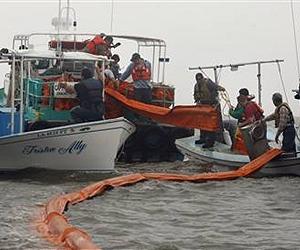
As BP began its crucial well kill operation Tuesday in the depths of the Gulf of Mexico, on the nearest spit of land marina owner Bill Butler and his son Dylan face a grim future.
"You better peel with two hands instead of one, boy, or you're going to be here all day," Butler told his son as they shelled raw shrimp.
"I got my way," the younger man replied.
The father-and-son team didn't expect to sell any of the prawns to customers — their 70-pound (30-kilogram) catch will go into the freezer for personal consumption.
Residents of Venice, the small fishing town at the southernmost tip of Louisiana, are eager to get back on the water, but they know it could be months or even years until the fishing trade returns to pre-spill levels.
Butler's bait and fuel business has been totally shot by the oil disaster. Just 13 fishing boats returned to the marina last weekend after the waters around Venice were reopened for fishing three weeks ago, compared to 200 boats on an average late July weekend.
Butler's 30 hotel rooms are filled with clean-up contractors working for BP, like all the other guest beds in town. His fishing business will not have a chance to pick up until the contractors have left, leaving some room for tourists to return.
"The spill isn't as bad as the media has suggested," he said, looking out into the marina's clear-looking water. "The amount of oil they've released is like a gnat on an elephant's behind."
Charter boat captain Chris Callaway hasn't taken a group out fishing since mid-April, two days before oil started leaking into the Gulf. Last year he had taken 70 trips out by this time.
"The perception is, everything down here is absolutely slap covered in oil," he said. "But that's not true. You could drive around all day and not find it."
Callaway has gone fishing in the Gulf every two or three days since the waters reopened to fishermen three weeks ago, catching redfish, shrimp, and speckled trout.
He's not concerned by environmentalists' claims that chemical dispersants released into the water by BP may have contaminated the seafood, and has been eating it every day.
"It tastes like fish," he said. "I'm not dead yet. If the government tells me it's not safe to eat, I won't eat it. But I'm not going to worry about it until someone tells me. They're the experts, I'm just a fisherman."
Up the road at the Riverside Restaurant, waitress Jamie Williams has had to sell seafood shipped in from northern Louisiana and even imported from China since the spill began.
"It's hurting our business," she said. "People come here expecting the local seafood they ate last year, and it's not the same."
The Riverside hopes to be serving some local shrimp by August, said Williams, optimistic that BP can finally plug the well and that the local produce will be certified as safe to eat again.
Joe Riotto and his family drove down Tuesday to Venice from Mississippi, where daughter Angela has just started graduate school. The family wanted to observe the oil disaster first hand, for themselves, he said.
The Riotto family took photographs next to a sign by the side of the highway that reads: "Welcome. You have reached the Southernmost point in Louisiana, Gateway to the Gulf."
The family was looking for somewhere to go and eat some shrimp, and Riotto said he too was unconcerned about contamination.
"Restaurants aren't going to sell the shrimp if they're bad," he said. "These are decent American people down here. They're not going to lie about it."
Share This Article With Planet Earth
