
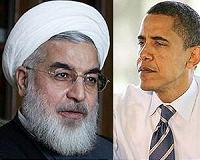
Was this weekend's nuclear deal and Washington's surprise prisoner swap with Tehran the final high point of a one-off diplomatic initiative or the start of a real realignment?
Some 35 years after US-Iran ties were broken amid the chaos of the Tehran hostage crisis, might the Great Satan and the Axis of Evil lynchpin be on the brink of real detente?
Most experts see a formal restoration of diplomatic ties as far off and progress as fragile, but Washington at least is ready to see how far the diplomatic track will take it.
"We do believe we should test whether or not there can be additional cooperation, or at least constructive dialogue," a senior US administration official told reporters.
On Saturday, the UN nuclear watchdog confirmed Iran had put a nuclear bomb beyond its immediate reach and the US and EU lifted their most draconian economic sanctions.
At the same time — in a surprise gesture — Tehran and Washington revealed they had reached a deal to exchange two groups of prisoners held in each other's jails.
"We were able, over the course of the last couple of years, to have more diplomatic engagement with Iran than I think we've had in total since 1979," the US official said.
US diplomats insisted, to widespread skepticism, that the two breakthroughs were entirely separate.
The Iran nuclear deal was the product of years of careful negotiations between Tehran and the P5+1 — the permanent UN Security Council members and the European Union.
The prisoner swap, by contrast, came after 14 months of back-channel negotiations, conducted in secret between US envoys and Iranian diplomats and intelligence officials.
But taken together, the initiatives have fed speculation that President Barack Obama is rewiring US networks in the Middle East to end the decades-long standoff.
– 'Natural future partner' –
Detente with Iran would make it easier to resolve the crises in Iraq, Syria and Yemen — even if it would unsettle traditional US allies Israel and Saudi Arabia.
"Deeply encoded in Obama's software, the answer was Iran," Joseph Bahout, a Middle East scholar at the Carnegie Institute for International Peace, told AFP.
"His team thinks that Iran is a natural future partner."
If the tensions between the Shiite Islamic republic and the Sunni Gulf monarchies subside, other conflicts fed by their proxies and their funding might be solved.
"I think that we have shown that over time, very persistent diplomacy can yield results," said the Obama administration official, defending the outreach.
The next test of whether Iran will continue to accomodate some US ambitions will be the UN-mediated Syrian peace talks due to resume later this month in Geneva.
Iran and its Lebanese ally the Hezbollah militia are key backers of President Bashar al-Assad's regime and potential spoilers as Washington tries to ease him out of office.
Saudi Arabia, meanwhile, is a sponsor of the rebels ranged against him, and Riyadh's anger at Obama's Iranian gambit may poison the mood as Washington pushes for peace.
"We have profound differences and continue to have profound differences with Iran over the situation in Syria," the US official, speaking on condition of anonymity, admitted.
And not only on Syria.
– 'Terror sponsor' –
Despite the image presented by US Secretary of State John Kerry's frequent meetings and calls with Iran's Foreign Mohammad Javad Zarif, nothing concrete has changed.
The countries still have no formal diplomatic ties. Crowds in Tehran still chant "Death to America!" Washington still lists Iran as a "state sponsor of terrorism."
And there may not be time to do much about this.
Supporters of Iran's reformist president Hassan Rouhani hope to make gains in parliamentary elections next month that will give him more room to maneuver around hardliners.
But the stance of Iran's Supreme Leader Ayatollah Ali Khamenei will remain key, and he may not be ready for further reconciliation.
Obama, meanwhile, has a clearer deadline. He is out of office in a year's time, and if a Republican candidate wins the White House he or she will likely adopt a tougher tone.
"Perhaps Obama is right," Bahout said. "But he won't get much further.
"What they achieved so far is huge, and they'll try to keep the relationship going discreetly, like a couple having an affair."
So, administration officials admit, there won't be a dramatic US embassy re-opening like there was last year in Havana. There simply isn't time.
Obama points to Iran breakthroughs as vindication of engagement
Washington (AFP) Jan 17, 2016 –
President Barack Obama hailed a series of breakthroughs with Iran as a vindication of his contentious policy of engagement Sunday and called on young Iranians to take the next step in building new ties with the world.
"Today is a good day," Obama said in a White House address to the nation after key aspects of a nuclear deal were implemented and US prisoners were released from Tehran.
"For decades, our differences meant our governments almost never spoke to each other. Ultimately that did not advance America's interests," Obama said in comments aimed at a skeptical US public.
"We achieved this through diplomacy without resorting to another war in the Middle East."
His comments followed a momentous day that saw international inspectors confirm that Iran had hobbled a nuclear program that had been decades in the making, costly to build and the source of extreme national pride.
The United States responded by easing sanctions that have crippled Iran's economy and frozen it out of the global economy.
The United States unblocked an estimated $100 billion of Iranian assets held abroad and settled a long-running international dispute that will see Iran get $1.7 billion directly from Washington.
Simultaneously, Washington and Tehran unveiled a prisoner swap deal that released high-profile American prisoners.
The detention of five Americans – including Washington Post journalist Jason Rezaian — had been particularly contentious in the United States, an uncomfortable echo of the 1979 hostage crisis which severed relations.
"When Americans are freed, that's something we can all celebrate," Obama said.
"I've met with some of their families. I've seen their anguish. How they ache for their sons and husbands. I gave these families my word. I made a vow that we would do everything to win the release of their loved ones, and we have been tireless."
– Unclear path ahead –
Obama said that the United States would continue to have problems with the Iranian government's "destabilizing activities" in the region, including support for militant groups.
That has been a primary focus for Republicans who have been deeply critical of Obama's policy as the United States heads to elections in November.
Obama insisted the United States would "not waver" in defense of its security, or that of its allies and partners.
But there was also an olive branch to Iran's young and growing population.
"I do want to speak directly to the Iranian people," Obama said.
"Yours is a great civilization with a vibrant culture that has so much to contribute to the world in commerce and science and arts."
"For decades your government's threats and actions to destabilize the region have isolated Iran from much of the world. Now our governments are talking to each other."
"Following the nuclear deal, you, especially young Iranians, have the opportunity to build new ties with the world. We have a rare chance to pursue a new path."
Despite his call and increasing US contacts with Iranian officials — including, it was revealed, with Iran's security community — US officials remain cautious about the prospect of re-establishing formal diplomatic relations before Obama leaves office in a year's time.
"This will be a long-term proposition; Iran is not going to change dramatically in the next year or two years," said one senior administration official, citing Iran's actions across the region, including support for President Bashar al-Assad of Syria.
But, the official added, "we want to make sure that the door is open for Iran to make that choice."
