
Launchspace experts have been watching the launch vehicle industry for that past several decades. Of all the interesting aspects of this business, the one that stands out the most is the fact that it is exceedingly difficult to make a profit in an industry that spends so much money.
Secondly, it is amazing that so many think they can make money providing launch services to so few customers. A quick look around the world reveals there are dozens of launch vehicle families vying for the few sales that occur.
There is an old saw that says: "If you want to become a millionaire in the launch industry, you need to first be a billionaire." The road to success is, in fact, littered with bankrupt companies and ex-billionaires.
Low and behold, Arianespace now finds itself faced with another financial dilemma. Not only is the European launch company feeling the pressure of competition from the new U.S. startup, SpaceX, but the Euro/dollar exchange rate is also forcing a request for more subsidies to shore up support for Ariane 5 operations at its Guiana Space Center in Kourou.
In recent years, since the EELV program was established for assured launch capability for the U.S. Air Force, Arianespace has been fat with launches and customers. Atlas and Delta have become dedicated to serve U.S. government launches and there have been no U.S. launch vehicles that could compete with Ariane 5.
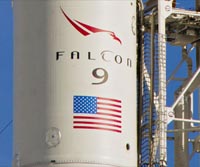
Then, along came SpaceX's Falcon 9, a commercial, low-cost launch system that could serve Ariane's customers at a much lower cost. Competition must have been a shock to Arianespace, after several years of acting as a monopoly. Then the Euro got stronger and the Falcon 9 looked even better.
Arianespace claims it is taking steps to remain competitive with SpaceX. However, over the past few months Falcon 9 has begun servicing communications satellite operators, having launched its first two commercial GEO missions.
It is important to note that SpaceX is not subsidized, while Arianespace continues to enjoy well over $100 million in annual gifts from the 20-nation European Space Agency. The reality of the situation is that Arianespace's subsidies make it non-competitive.
Competition is good. It leads to better products and services at lower prices. It is hard to feel sorry for Arianespace, whose subsidies have been cut in recent years, while it complains about having to face real competition.
