
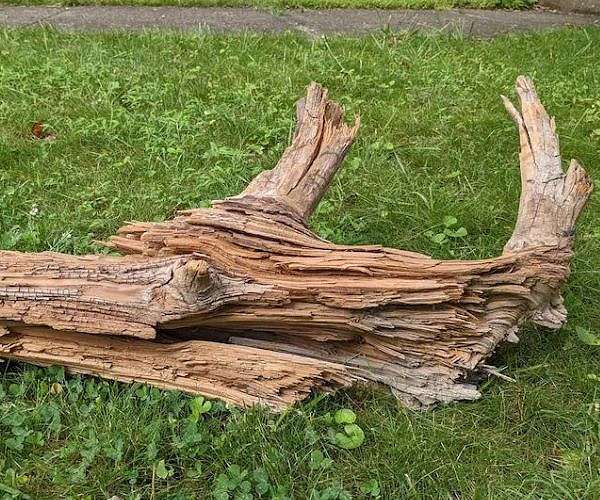
Researchers have proposed a new approach to long-term carbon storage, drawing inspiration from a 3775-year-old buried log found in Quebec. The method, referred to as "wood vaulting," involves burying wood in specially engineered vaults to store carbon for hundreds of years, offering a potential low-cost strategy to combat climate change.
With the world striving for net-zero carbon emissions, reducing fossil fuel emissions alone won't suffice. Methods of carbon dioxide removal (CDR), including both engineering solutions like direct air capture and nature-based strategies such as reforestation, are essential to meet climate targets. Forests, which act as carbon sinks by storing atmospheric carbon, often release that stored carbon back into the atmosphere through decomposition or burning, limiting their net impact.
Ning Zeng and colleagues at the University of Maryland are exploring the idea of using wood vaults to preserve carbon-storing woody biomass for extended periods, thereby reducing atmospheric carbon levels. The ancient log discovery shows the potential for such a system. This log, buried in clay for nearly four millennia, lost only about 5% of its carbon, suggesting that wood burial in low-permeability environments could be an effective means of carbon storage.
Using carbon cycle models, the researchers estimate that wood vaulting could sequester as much as 10 gigatons of CO2 annually by using sustainably harvested trees and underutilized wood waste, such as urban tree debris and byproducts from forestry operations. The initial cost for this method is estimated between $100 and $200 per ton of CO2.
Yuan Yao, in a related commentary, highlights the need for a thorough life-cycle analysis of the environmental impacts of wood vaulting, considering supply chains, ecosystems, and geographical variations. Such assessments will be crucial for scaling up biomass burial projects globally.
Research Report:3775-year-old wood burial supports "wood vaulting" as a durable carbon removal method
